jump to the contents
Features

Column

اختيار اللغة

Our Advertisement in Reader's Digest
Issue of January 2010

Image

The Potato Evolution

For many people, the potato is no more than a starchy, tuberous crop. Yet, its history is a rich one to savour. Archaeologists have determined that it dates back to 500 B.C., in South America after discovering remains of the tuber beneath the soil of the Andes Mountains.

The Incans were believed to be the first ones to cultivate potatoes as a staple food. After the Incan Empire collapsed following the arrival of the Spanish Conquistadors in the 16th century, the potato was subsequently brought to Europe.

RESILIENT AND CONVENIENT

It did not take long for farmers there to realise the potato’s resilience - it could be grown in less fertile soil and withstand colder climates. This made it an easy crop to cultivate. Furthermore, compared to wheat, the potato harvest produced far greater yields.

Although it comprised only three per cent protein, potatoes provided a significant energy boost to the average person’s diet then. They were also found to contain an ideal balance of amino acids in protein (almost identical to that of eggs) - mostly found in its skin. To gain maximum nutritional benefit, people were advised to eat it whole,rather than peeled.

Besides being an easy crop to grow, it was also simple to prepare. These factors promoted the potatoes popularity across Europe which in turn, helped to support and boost the continent’s population. But things changed in 1845 *1.

TRAGEDY STRIKES

A mysterious disease struck potato crops across Europe, causing the plants to turn black and rot, and its leaves to wither. And though it affected many countries, Ireland was worst hit, with half of its potato crop blighted or destroyed by this disease - later attributed to a fungus.

With many Irish dependent on potatoes for sustenance, a period of hardship ensued. By the time the crisis, known as the Great Potato Famine, had ended in 1850, over a million Irish had perished from starvation. The same number crossed the Atlantic Ocean to start their lives anew in North America.

A EUROPEAN FIXTURE

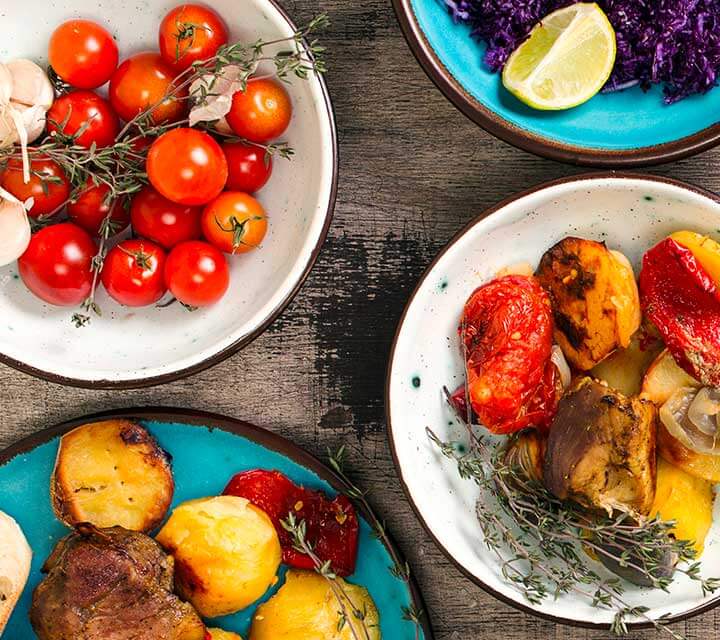
Across Europe today, it is easy to find dishes that combine potatoes with meats,fish, cheese, and other ingredients. Often,these are enhanced with rich, savoury meatgravies and tomato sauces.

Image

While the methods of preparation may vary across countries, there is no denying that potatoes have indeed become a central fixture of cuisines in nearly all of Europe.

In Portugal and Spain for instance,bacalhau, a popular salt cod dish can be finely shredded and cooked with boiled potatoes,or fried into a potato croquette. The Swiss prefer slicing potatoes and covering them in cheese before baking them into raclette.

It is widely accepted that potatoes do not have much taste themselves. However, the ease with which potatoes can blend with much-favoured salty and umami tastes found in many other ingredients, makes them highly versatile.

A delicious example is when potatoes are added an intensely flavored bouillon - a feature in many European soups and stews. With such versatility, it is easy to imagine why for many people, it is possible to eat a potato dish every day.

*1 The Great Famine: Studies in Irish history,1845-52, eds. R. Dudley Edwards, T. Desmond Williams; New York Univ. Press, 1957, 1 v.