
- Use of Key Digital Technologies

Connecting Every Area of DX
through Data-Driven
Management
Marketing
- ● Customer-Oriented Personalized Marketing
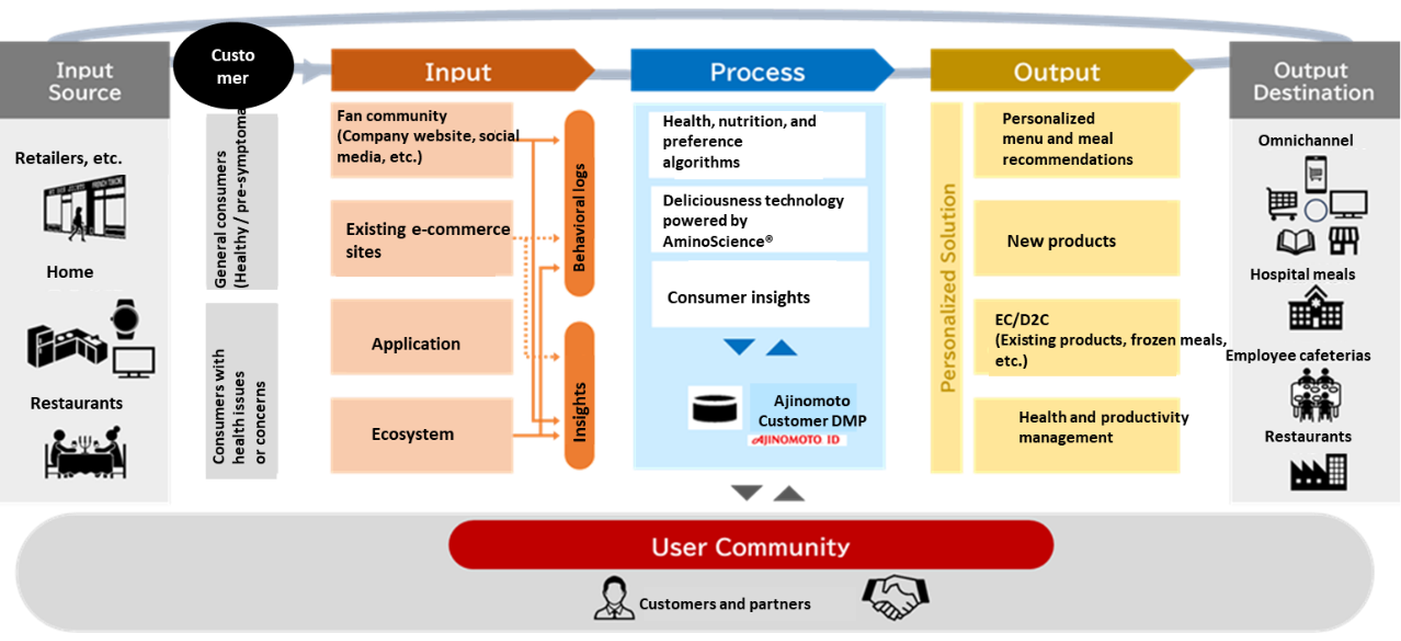
- We will obtain multifaceted information on customers related to food and health through many touchpoints, aggregate the data, and build a DMP (Data Management Platform). By integrating and operating product, service, and development data, we will provide customers with new customer value and customer experiences (CX).
Related Materials
R&D
- ● The Equation of Specialty and Innovation
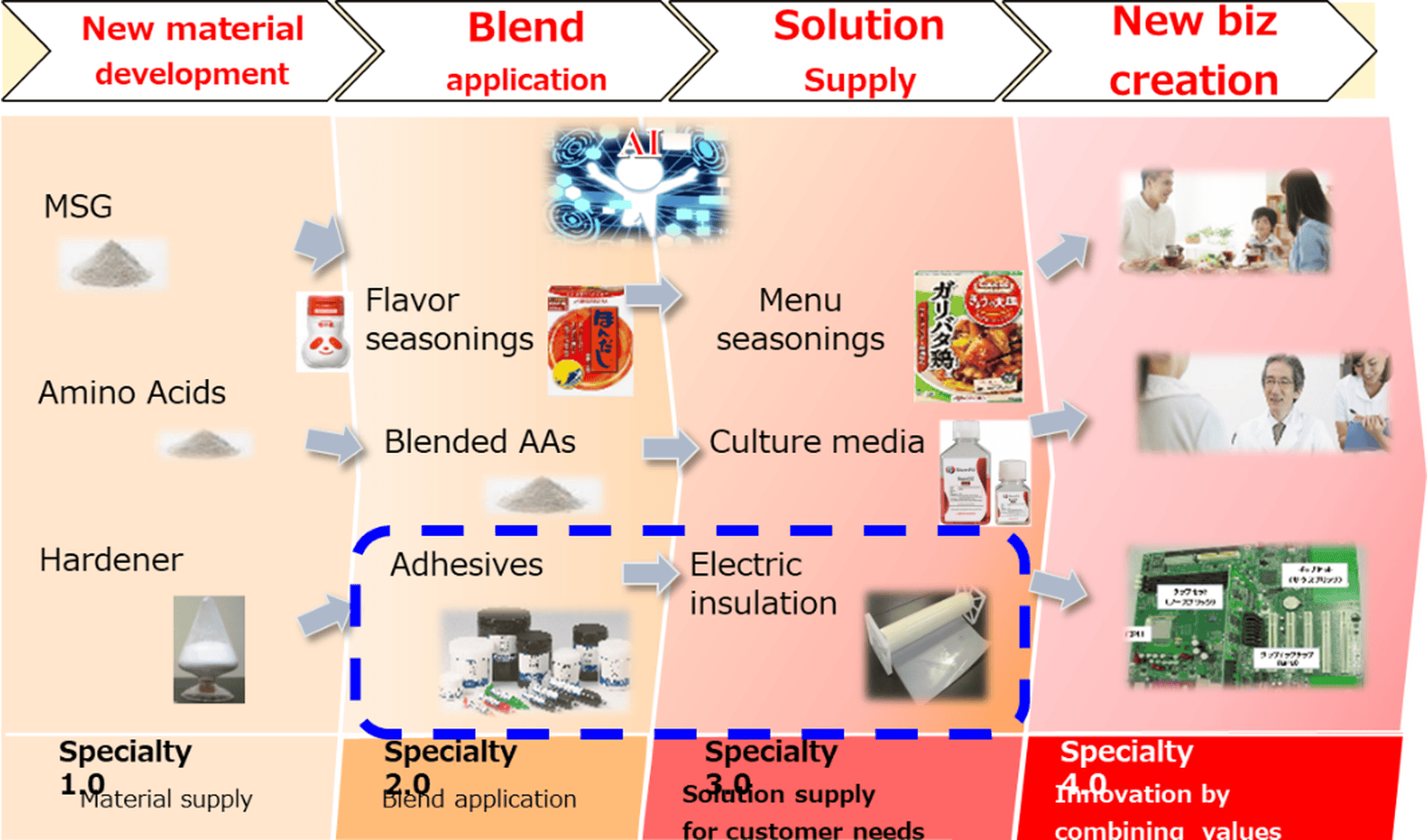
- Our group develops a wide range of businesses, including seasonings, foods, amino acids, chemical products, and electronic materials. The concept of innovation through the development of specialty products and product services has been modeled and can be expressed as the equation below. In accordance with this equation, by accumulating BIG data (development DMP) and applying AI, it is possible to realize specialty development and the development of innovative products and services across business frameworks.
■ Equation of Innovation
Related Materials
SCM
- ● Smart SCM
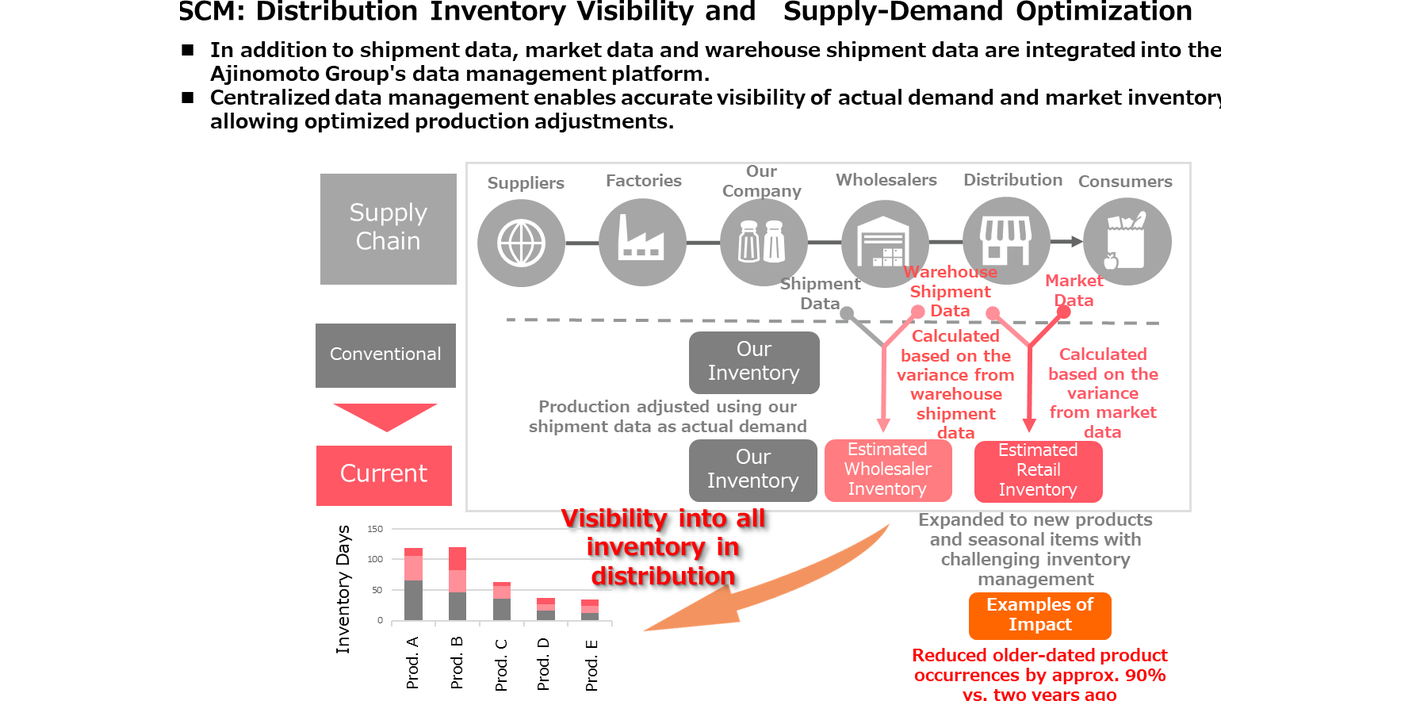
- Current SCM operations are extremely complex operations involving many personnel and various means of information exchange (fax, Excel sheets, and e-mail), and as a result, they have become an area with many issues related to inventory, cost, and ESG. To make this area smart, it is essential to introduce a DMP (Data Management Platform) that reads and accumulates data in various formats, as well as AI that applies appropriate algorithms to that data and makes rational judgments. For this reason, it is essential to receive support from digitally native experts. In addition, for improvements in real operations such as streamlining logistics flows, it is also important to introduce the know-how of other leading companies. Our group established F-LINE Corporation, a joint venture for jointly distributing food products across corporate boundaries. We believe that developing and introducing logistics systems that rationally connect companies will lead to the resolution of social issues in SCM, and we would like to demonstrate leadership in this area.
■ SCM: Visualization of Distribution Inventory and Optimization of Supply and Demand
■ Joint Food Distribution: Establishment of F-LINE Corporation
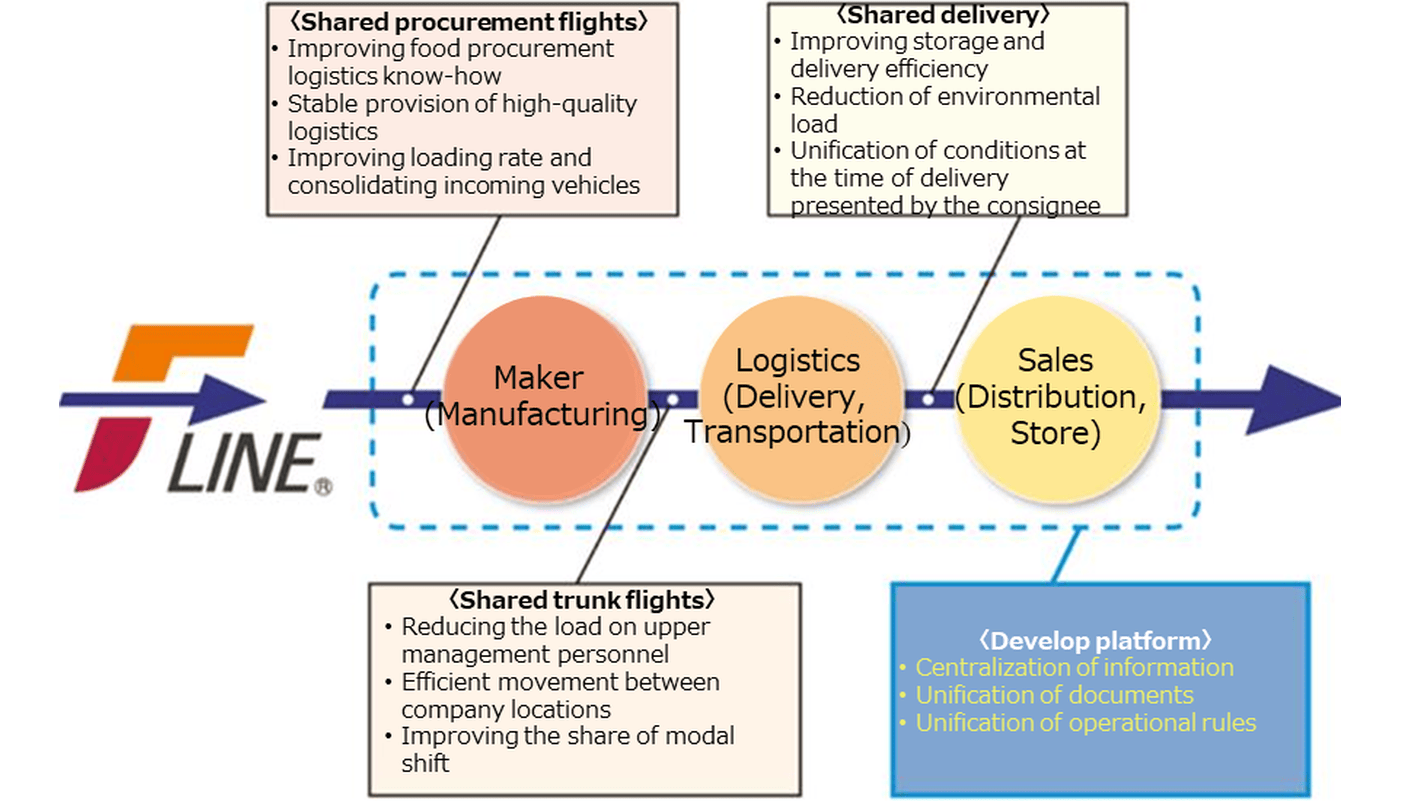
We are linking logistics data from eight major food companies, including Kewpie Corporation, and wholesalers, and are aiming to improve the efficiency of the supply chain and solve social issues. We have begun demonstration experiments aimed at resolving on-site issues, such as shortening driver waiting times.
Related Materials
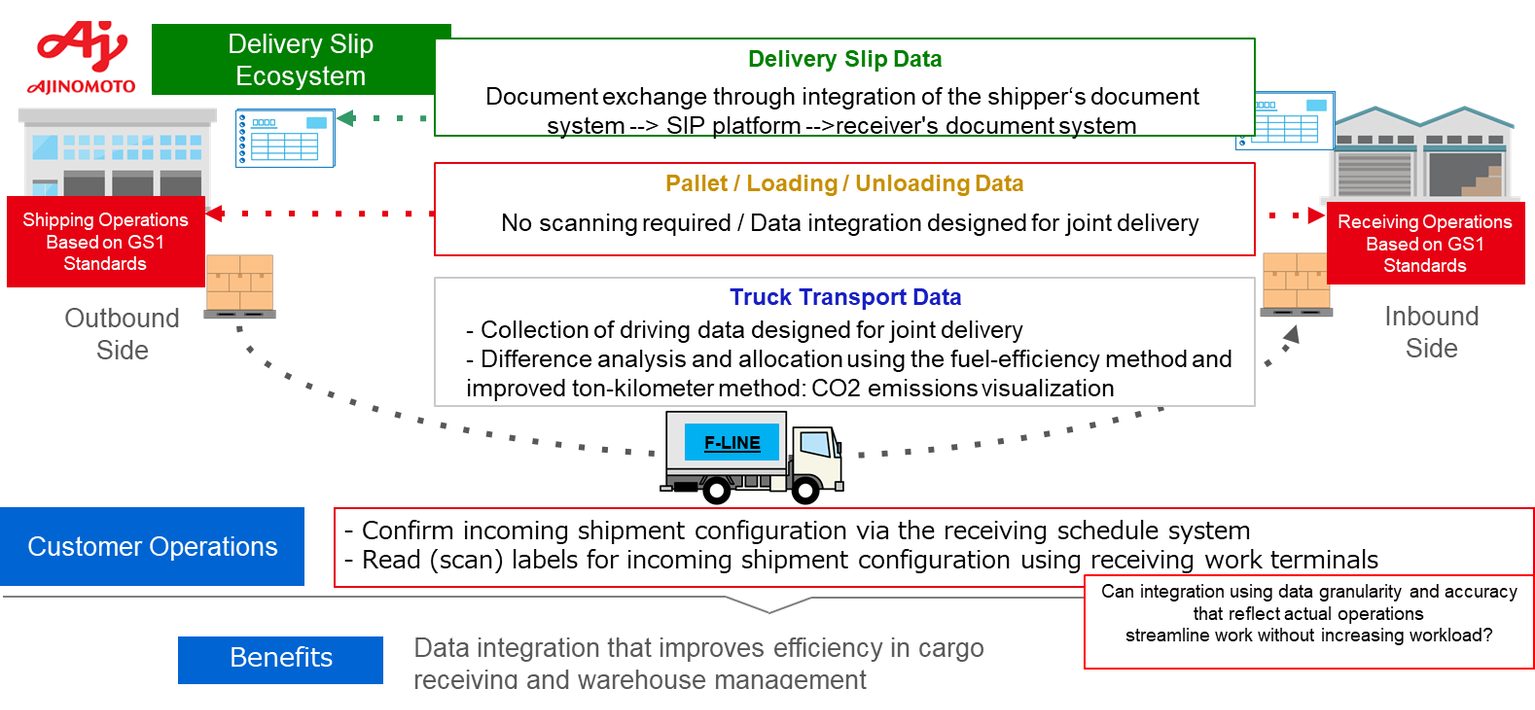
- ● Toward Fundamental Reform of the Logistics Industry - Standardization Through GS1 Codes
-
Logistics in the food industry requires more time and effort for inspection and receiving operations due to industry characteristics such as the large number of products and the need for temperature control and shelf-life management. In the logistics industry as a whole as well, there are issues such as a shortage of drivers and labor shortages, including the “2024 problem,” and greater efficiency and labor-saving are required. Against this background, in order to standardize information across the entire supply chain and realize efficient logistics operations, the DPC Council (Data Platform Construction) has been launched, and manufacturers, wholesalers, the retail industry, and government agencies (the Ministry of Economy, Trade and Industry; the Ministry of Land, Infrastructure, Transport and Tourism; and the Ministry of Agriculture, Forestry and Fisheries) are working together to standardize logistics operations across the industry by utilizing standard logistics codes.
Specifically, we are conducting demonstration experiments on logistics management using the internationally standardized EPCIS standard and GS1 codes together with Nissin Foods Co., Ltd. The EPCIS standard is an international standard for recording as data the history of products in the supply chain, such as where they were manufactured, along which routes they were transported, and when they entered warehouses. GS1 codes are international rules for barcodes and QR codes, and are used for supply-chain history management based on the EPCIS standard. From manufacturing to sales, they enable common reading and recording regardless of the responsible operator, and because they are international standards, they also support global product management. By assigning GS1 codes to individual products, packaging, and shipment units, and recording and sharing them as event data, it becomes possible to grasp receiving information before goods arrive, reduce the labor required for inspection work, and shorten unloading time. Specifically, because it is known at the individual product level what will arrive before the products arrive, receiving inspection work can be omitted by automatically matching multiple transport packages that have arrived with the GS1 codes of the shipment units, without checking the contents of each transport package item by item. At the same time, this also leads to improved sustainability and transparency across the entire supply chain, including visualization of CO2 emissions and securing traceability. Furthermore, this also leads to improved sustainability and transparency across the entire supply chain, including visualization of CO2 emissions and securing traceability.
Related Materials
Smart Factory
- ● Smart Factory
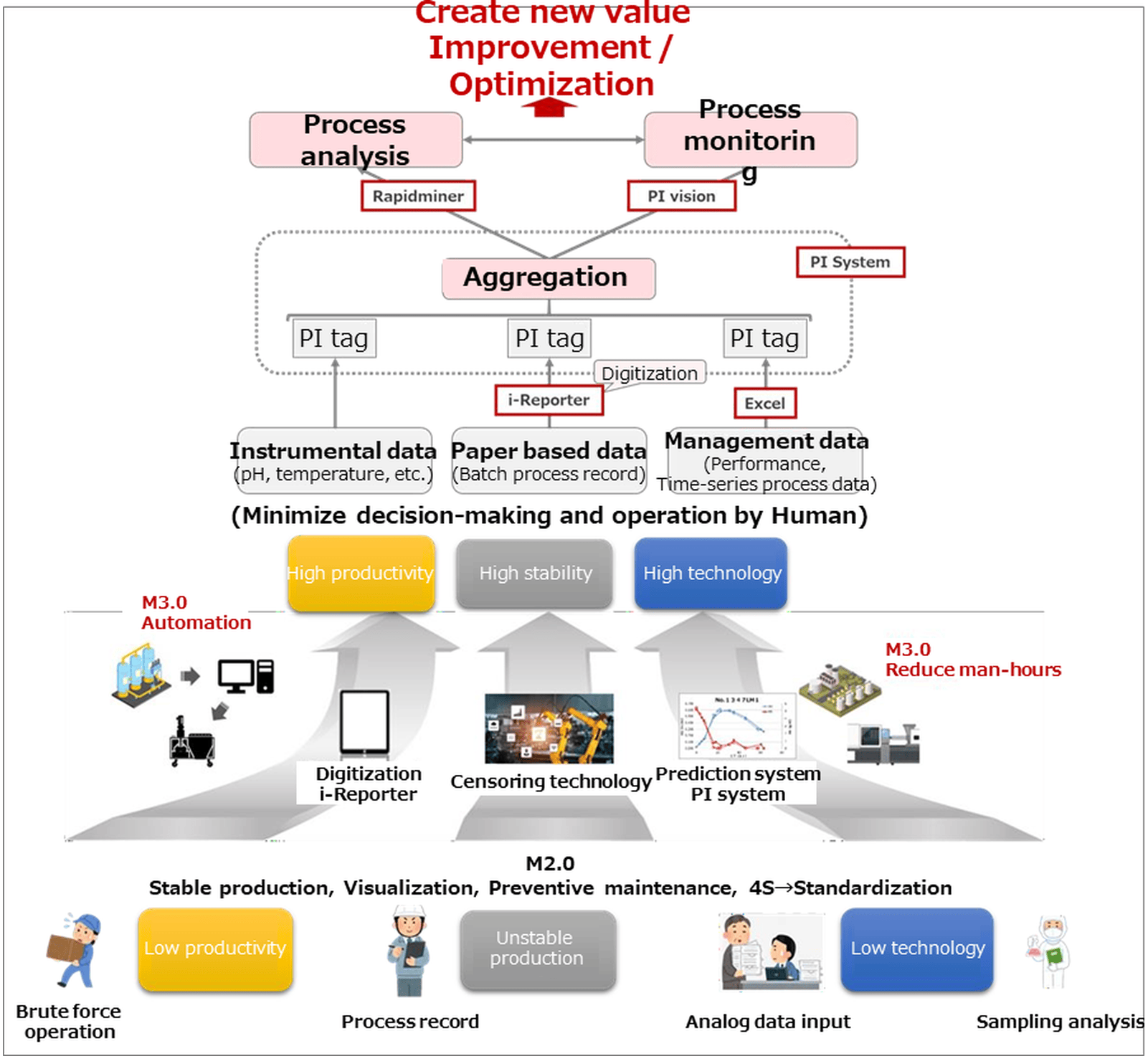
- The construction of smart factories in our group began with the M4.0 project (Manufacturing 4.0: stabilization →standardization →full automation →integration with SCM). In DX, based on this M4.0, the introduction of sensors, robots, and AI has made it possible to achieve an unprecedentedly high level of productivity. We aim to realize highly streamlined smart factories that self-learn and continue to improve while synchronizing with businesses and logistics.
Related Materials
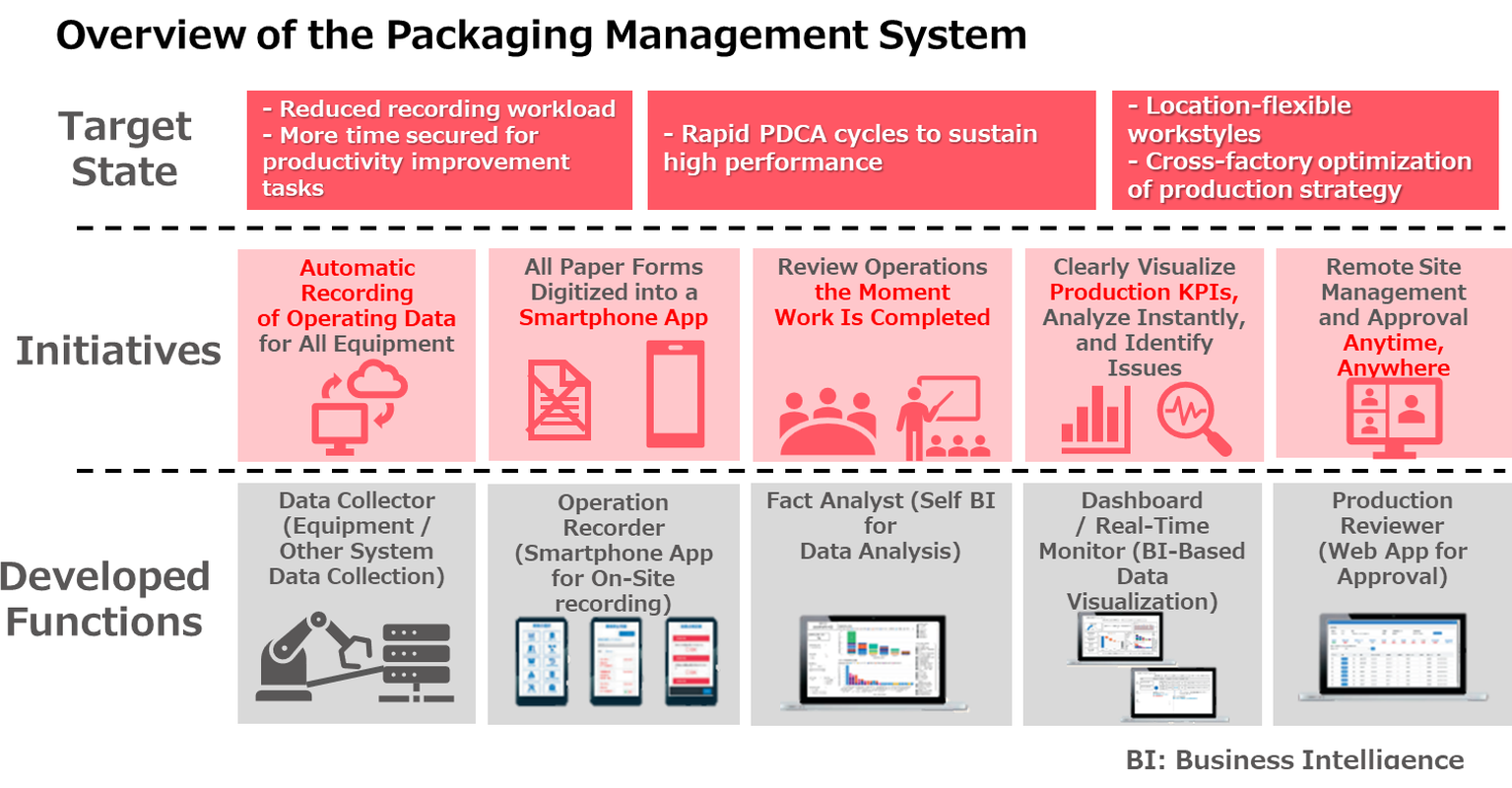
- ● Smart Factory Case 1: Packaging Process Management at Ajinomoto Foods Co., Inc.
- At Ajinomoto Foods Co., Inc., which produces and packages seasonings and processed foods, the packaging processes include a wide variety of equipment with many different specifications, and it took a great deal of time to record 10 to 20 paper forms every day. In addition, data analysis also took time, creating the issue that sufficient improvement activities could not be carried out. Against this backdrop, including the decline in the working-age population associated with Japan’s declining birthrate and aging population, and the diversification of workstyle needs, the company began introducing “APPLE,” a packaging management system that standardizes process management operations. Working with various system vendors, it developed an app that anyone can use. The company switched recording media from complicated paper forms to an app, automatically acquired data from all types of equipment, and introduced a system that enables paperless operations “anytime, anywhere.” This made it possible for everyone to check operating status without being on site, and enabled rapid data analysis and improvement. After verification and improvement at the company’s Mie Plant, “APPLE” has already been introduced at all of the company’s plants in Japan. Going forward, the knowledge and know-how gained from introducing this advanced packaging management system will also be deployed to group companies in Japan and overseas.
Related Materials
- ● Smart Factory Case 2: Production Equipment Data Standardization Consortium
-
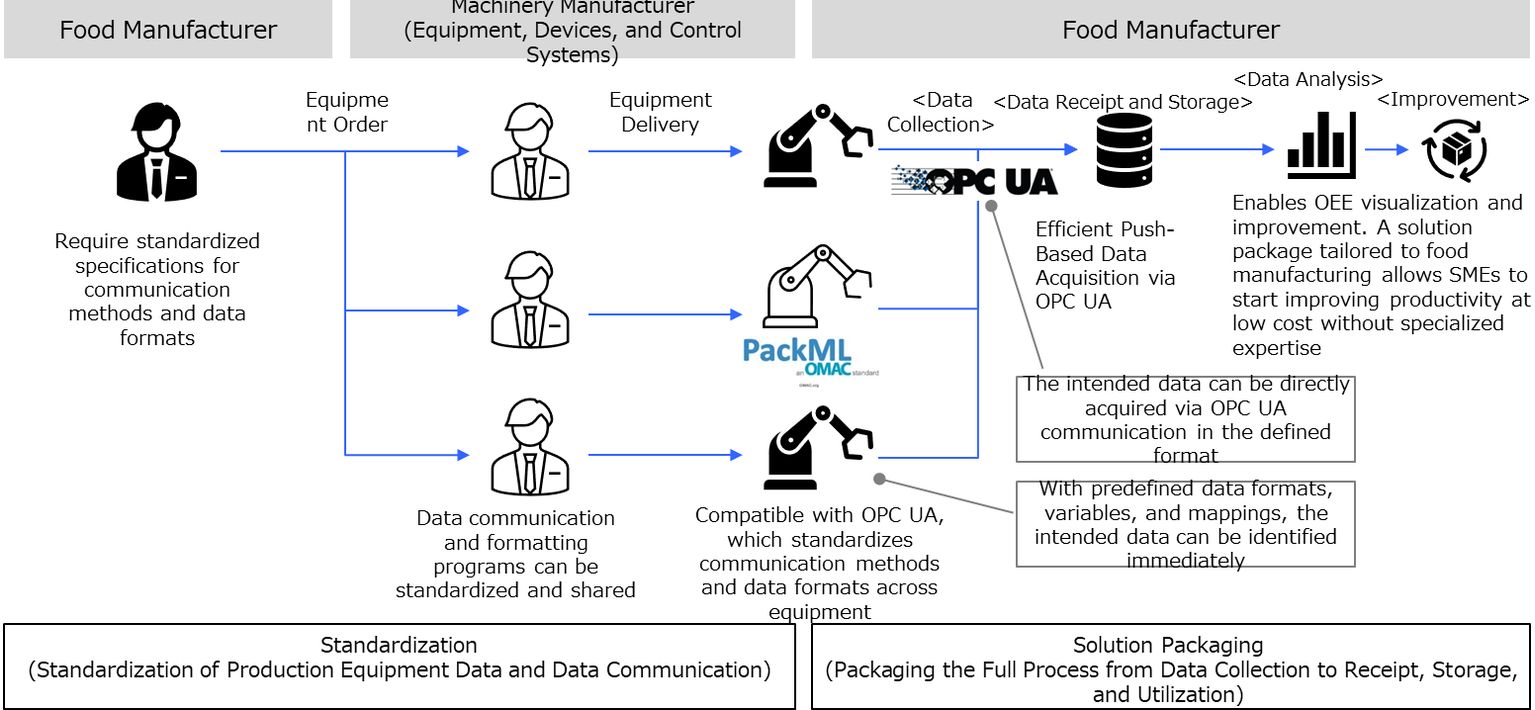
Compared with other industries, the food manufacturing industry is labor-intensive, and as it becomes even more difficult to secure human resources in the future, it is facing various issues such as further labor-saving, productivity improvement, and the advancement of quality assurance. To solve these issues, business transformation through the utilization of production equipment data is indispensable. At present, however, communication specifications and data formats differ by equipment, making it difficult to collect, integrate, and analyze data. For this reason, standardization of production equipment data is required. To solve these issues common to the industry, Ajinomoto Co., Inc. and Ajinomoto Foods Co., Inc. called on other companies in the industry to cooperate in areas of collaboration, and together with Calbee, Inc.; Suntory Holdings Limited; House Foods Corporation; Meiji Co., Ltd.; and the Japan Packaging Machinery Manufacturers Association, an industry association for food-related machinery, established the “Production Equipment Data Standardization Consortium” in July 2025.
In cooperation with relevant ministries and agencies such as the Ministry of Agriculture, Forestry and Fisheries and the Ministry of Economy, Trade and Industry, this consortium will consider standardizing mainly data specifications and communication methods, based on internationally widely used standards, targeting packaging processes, which are relatively common among production equipment in the food manufacturing industry. Through the dissemination of standard specifications, it is expected that data utilization will become easier even without specialized knowledge, and that small and medium-sized enterprises will also be able to work on productivity improvement and quality improvement at low cost. Through this activity, the Ajinomoto Group will contribute to improving productivity and quality across the entire food industry, and will also contribute to delivering a wide range of safe and secure products to consumers.
<The State the Consortium Aims to Achieve>
Related Materials
Collaboration with External Organizations
- ● List of Major Consortia, Study Groups, etc.
- We are actively promoting collaboration with other companies, the use of external services, and participation in consortia. We are currently collaborating with many external organizations, including the University of Tokyo, Kyoto University, and Hirosaki University.
Related Materials
Examples of Conditions Being Developed
to Promote the Use of the Latest Technologies
- ● Development of the Information Processing Technology Environment
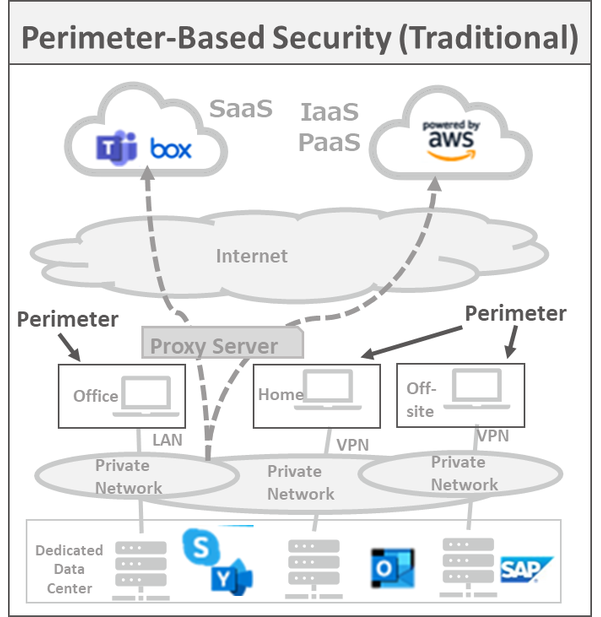
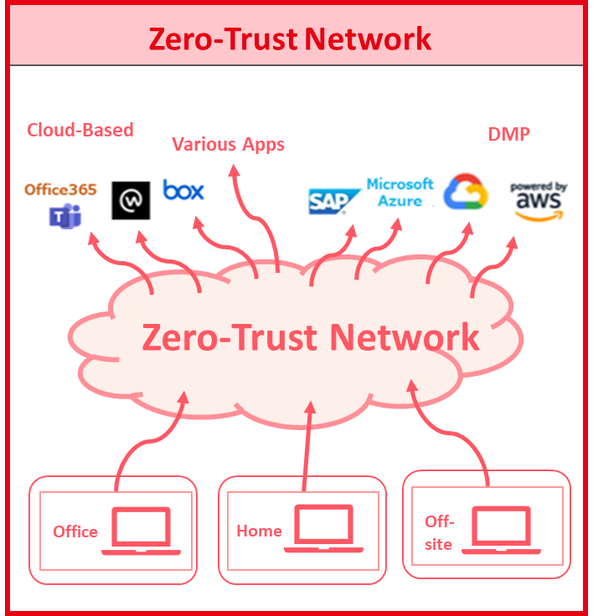
- The risks of promoting DX are: (1) sunk (loss) nature, (2) leakage or outflow of corporate data and personal information, and (3) accidents or violations of laws and regulations related to the handling of data, such as GDPR (General Data Protection Regulation). (1) Sunk (loss) nature means that, because investment in digital (human resources, information, data, etc.) is an investment in intangible assets such as information and knowledge, value may disappear (become zero) when the investment does not go well. With respect to investments, regardless of whether they are tangible or intangible, we have established committees such as the Corporate Alliance Committee and the Investment and Financing Committee, and in the case of digital-related investments, we rigorously check this sunk nature. (2) With respect to the outflow of corporate data and personal data, led by the Information Risk Committee, we address risks from both sides: measures to prevent information leakage through IT systems, preventing intrusion by spyware and hacking from outside, and awareness-raising activities through the Corporate Conduct Committee. (3) For GDPR compliance, with the Management Risk Committee as the top organization, we establish a structure that includes information security committee members, experts, and external advisors, and that enables complete global compliance, and we address the risks.
Related Materials
- ● Investment Plan for DX
- At IR Day held on March 23, 2021, the Representative Executive Vice President (CDO) explained investments related to DX in the Medium-Term Management Plan. This supplements the explanation of “Digital Transformation (DX) of the Ajinomoto Group,” and the disclosed content is based on decisions by our Board of Directors.
- ・2020-2022: Approximately 25.0 billion yen
- ・2023-2025: Approximately 20.0 billion yen