How food can bring people together:
Key lessons from the launch of the OECD WISE Report on “Promoting Social Connectedness Through Food”
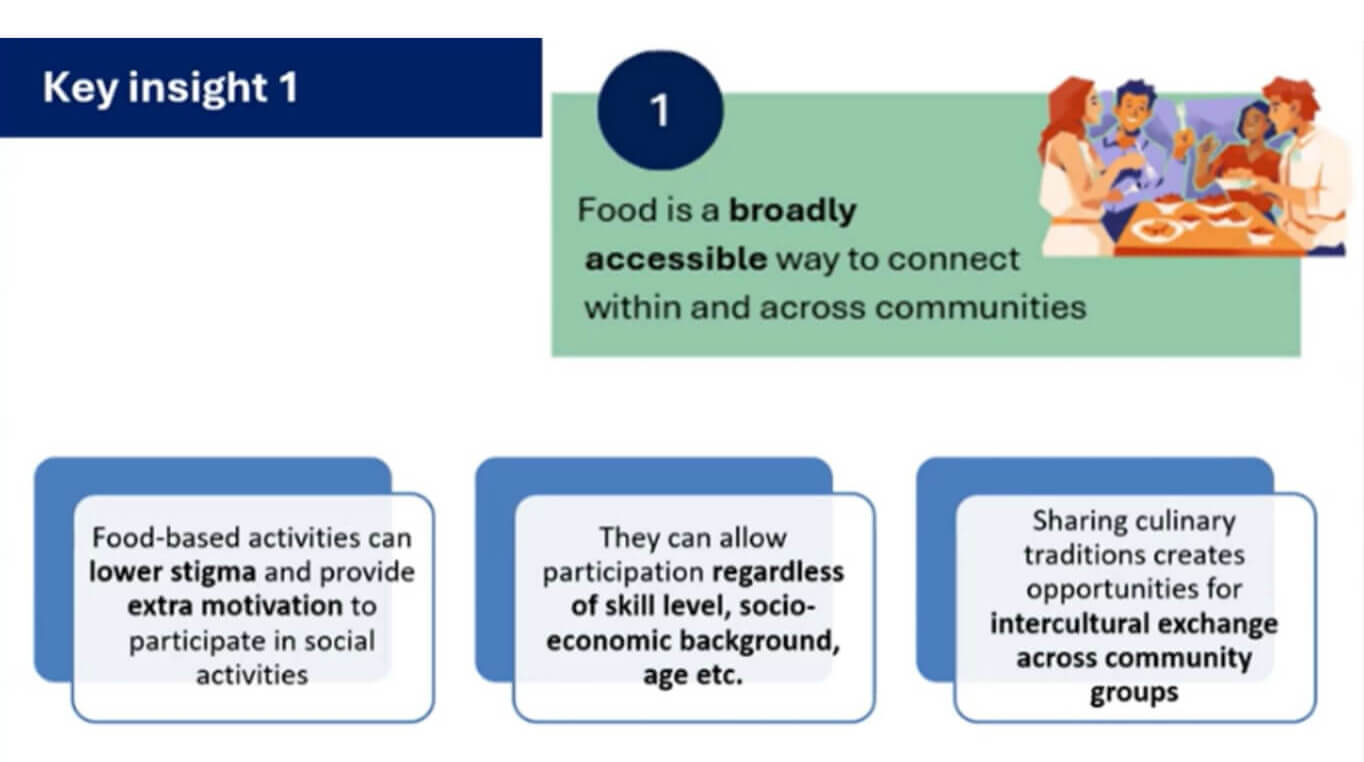
On 2 July 2026, the OECD Centre on Well-being, Inclusion, Sustainability and Equal Opportunity (WISE Centre) launched a new research report, Promoting Social Connectedness Through Food, developed with the support of Ajinomoto Co., Inc. The report is an important contribution to the growing evidence base on the relationship between food, social connection and well-being. Its central message is simple but powerful: food is not only a source of nutrition, but also a practical and accessible way to bring people together.
The publication comes at a time when loneliness and social isolation are increasingly recognized as major societal challenges. The report starts from a stark reality: according to the WHO, loneliness may be associated with an estimated 871,000 deaths every year worldwide. Against this backdrop, the OECD WISE report shows how everyday food-based activities - growing, preparing, cooking and sharing food - can create opportunities for interaction, trust and belonging within communities.
Among its key findings, the report shows that food-based initiatives can serve as an accessible entry point for bringing people together, help revitalize community spaces and generate wide well-being benefits for participants. The report also highlights that these initiatives can create meaningful opportunities for volunteers, while underlining the importance of government support and the need for stronger evidence to better understand what works in practice.
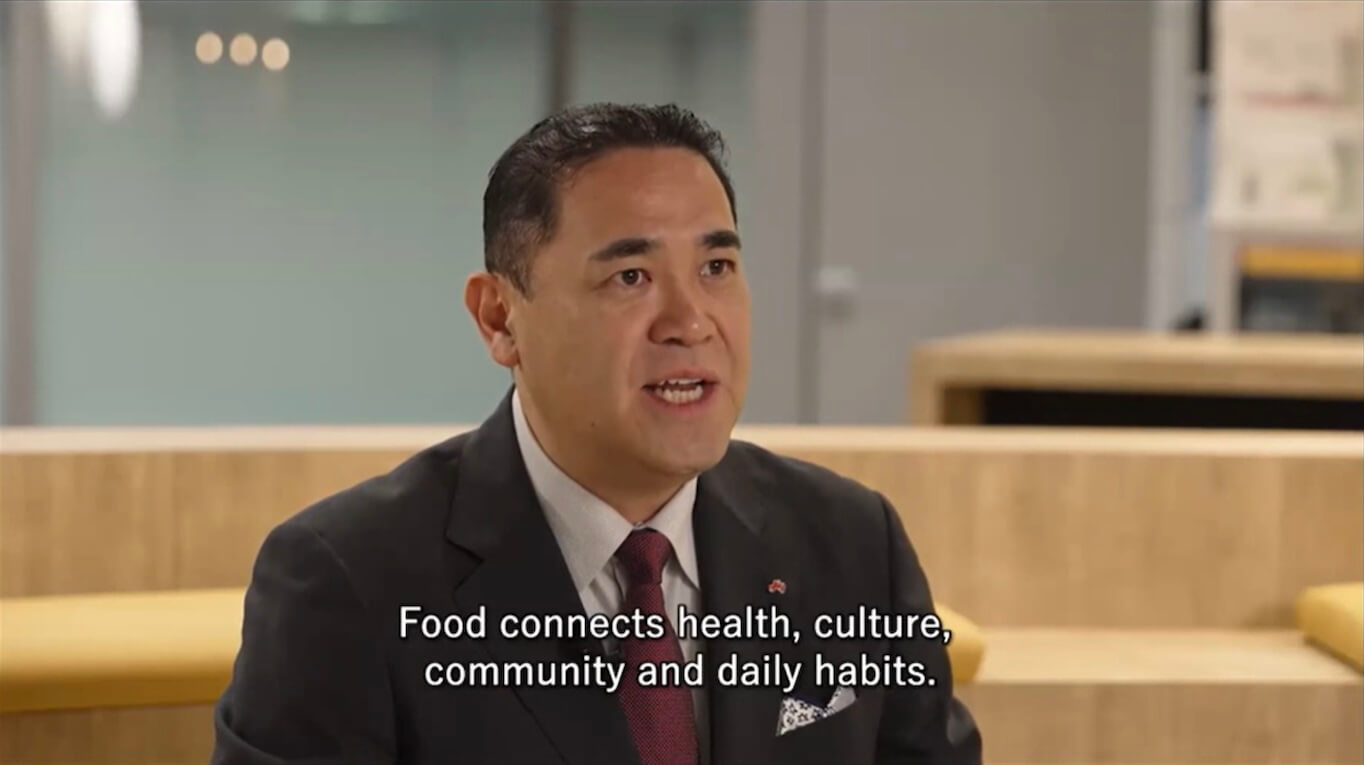
The launch of the report was accompanied by a webinar that brought these findings into dialogue with concrete examples from the field: Resto VanHarte (Netherlands), represented by Operations Manager Anne Kaasenbrood, the Boston Food Forest Coalition (USA), represented by Executive Director Orion Kriegman, and Men’s Pie Club (UK), represented by co-founder and Managing Director Jamie Sadler. Following opening remarks from Yasushi Masaki, OECD Deputy Secretary-General, and a pre-recorded video message from Shigeo Nakamura, CEO of Ajinomoto Group, Romina Boarini, Director of the OECD WISE Centre, presented the report’s main findings. In his message, Shigeo Nakamura highlighted the role that private-sector actors can play in supporting social connectedness through food. He pointed to AjiPanda Shokudo (Cafeteria) as a concrete example of Ajinomoto’s practical engagement, alongside our support for research in this field. In 2025 Ajinomoto Co., Inc. launched a collaboration with the OECD WISE Centre, with the goal of shedding further light on how food relates to loneliness and social isolation. The report also features Ajinomoto Co.’s AjiPanda Shokudo (Cafeteria) as one example of existing practice of the use of food to help foster social connections. Drawing on this and other evidence, the report examined case studies in OECD member countries, yielding new insights into how food-based initiatives can help strengthen social connections.
The discussion then continued with a panel moderated by Katherine Scrivens, Analyst in the Well-being Data Insights and Policy Practice unit at the OECD WISE Centre, featuring representatives from three of the food-based initiatives included in the report’s case studies, showing how different food-based formats can respond to social connection needs.
In the Netherlands, Resto VanHarte illustrated how communal dining can create welcoming spaces where people from different backgrounds meet around a shared meal. In Boston, the Boston Food Forest Coalition showed how vacant urban lots can be transformed into gardens and public food forests, helping to rebuild local social infrastructure. In the United Kingdom, MEN’s PIE CLUB demonstrated the value of practical and non-stigmatising formats, using community cooking groups to reach men who may not identify as lonely or seek traditional social or mental health support.
For Ajinomoto Group, the event created renewed momentum and inspiration for our work at the intersection of food and well-being. By combining OECD evidence with real-life examples from communities, the launch of this report offered a practical lens for future initiatives and provided a tangible way to express our purpose: contributing to the well-being of all human beings, our society and our planet with “AminoScience.”
Looking ahead, these lessons also resonate with the broader OECD well-being agenda ahead of the next OECD World Forum on Well-being, which will be hosted in Tokyo, Japan, in autumn 2028. The Forum will offer an opportunity to continue the conversation on how evidence, policy and practical initiatives can help place well-being at the centre of collective action. For Ajinomoto Group, it will also create a relevant platform to further connect our work on food, well-being and social connection with the international policy dialogue.
To read the full report, please click here. The recording of the launch event is now available on the OECD event webpage, and Shigeo Nakamura’s video message can be viewed here.