
- DX Strategy

Creating Value through Corporate Transformation
to Achieve Our Goals with Confidence
DX Strategy Toward
the 2030 Roadmap
● Data-Driven Management
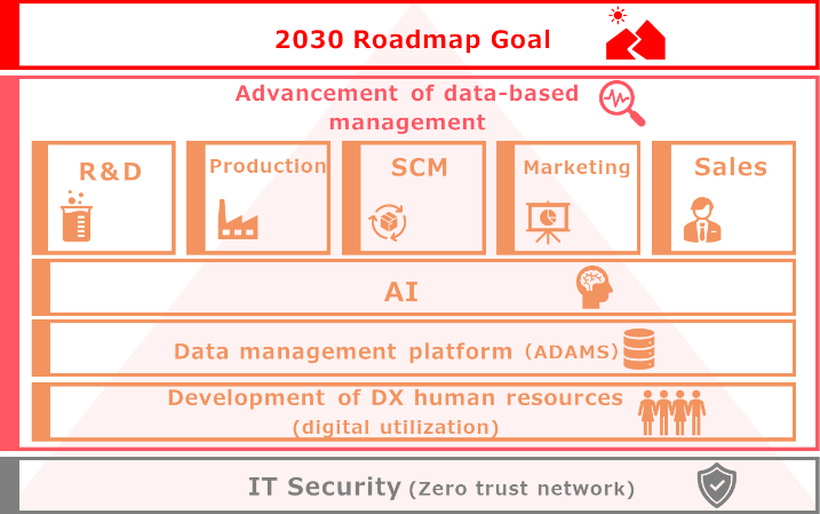
To achieve the “2030 ASV Indicators,” we aim to realize data-driven management by advancing management practices through the effective use of data.
To this end, it is essential to establish a framework that enables various types of data across the entire value chain to be accumulated and processed on a common platform and utilized for comprehensive decision-making. Ajinomoto Co., Inc. has introduced and is developing ADAMS (Ajinomoto Data Management System) as its data management platform.
As society shifts from an era of “Use AI” to one of “With AI,” we will improve productivity by leveraging AI and digital technologies in our operations, while also making our data AI-ready to establish an environment in which people can work collaboratively with AI across all business activities.
In parallel, we are promoting the development of DX talent with strong digital capabilities and strengthening IT security to support these initiatives.
● KPIs
- (1) Company-wide Priority KPIs [DX Goals and Priority KPIs]
-
As the purpose of DX is corporate transformation, our DX goals are aligned with and disclosed as our management goals.
The “ASV Indicators” consist of economic value indicators that represent the financial performance generated by the Ajinomoto Group through its businesses, as well as social value indicators based on the value we aim to provide and co-create.
To support these indicators and maximize corporate value, we are strengthening our intangible assets.
① ROE and ROIC, from the perspective of capital efficiency
② Organic growth rate, from the perspective of growth
-
③ EBITDA margin, as an indicator of cash-generating capability
④ Employee engagement score
⑤ Corporate brand value - (2) KPIs for Individual Initiatives
-
KPIs are established for each function to drive DX initiatives.
① SCM: Inventory turnover days, cost reductions
② Business model transformation: Sales, business profit
Related Materials
- ● Development of ADAMS
-
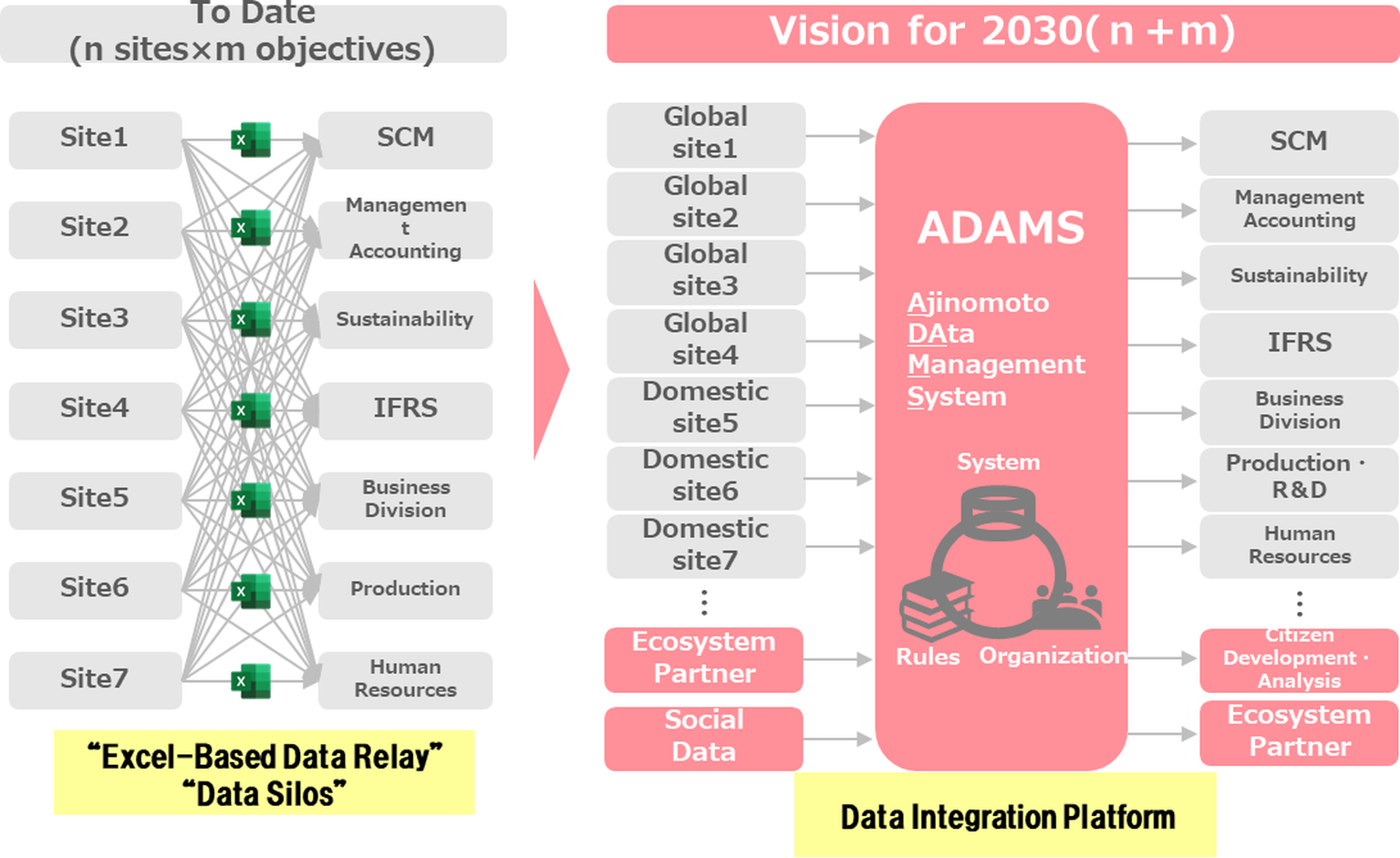
Traditionally, data utilization followed an “n×m model,” in which data was collected separately from each site or organization for each specific purpose—essentially an “Excel bucket brigade.” While this approach could minimize individual system investments, it made it difficult to respond quickly to diverse data utilization needs and ultimately resulted in higher total costs.
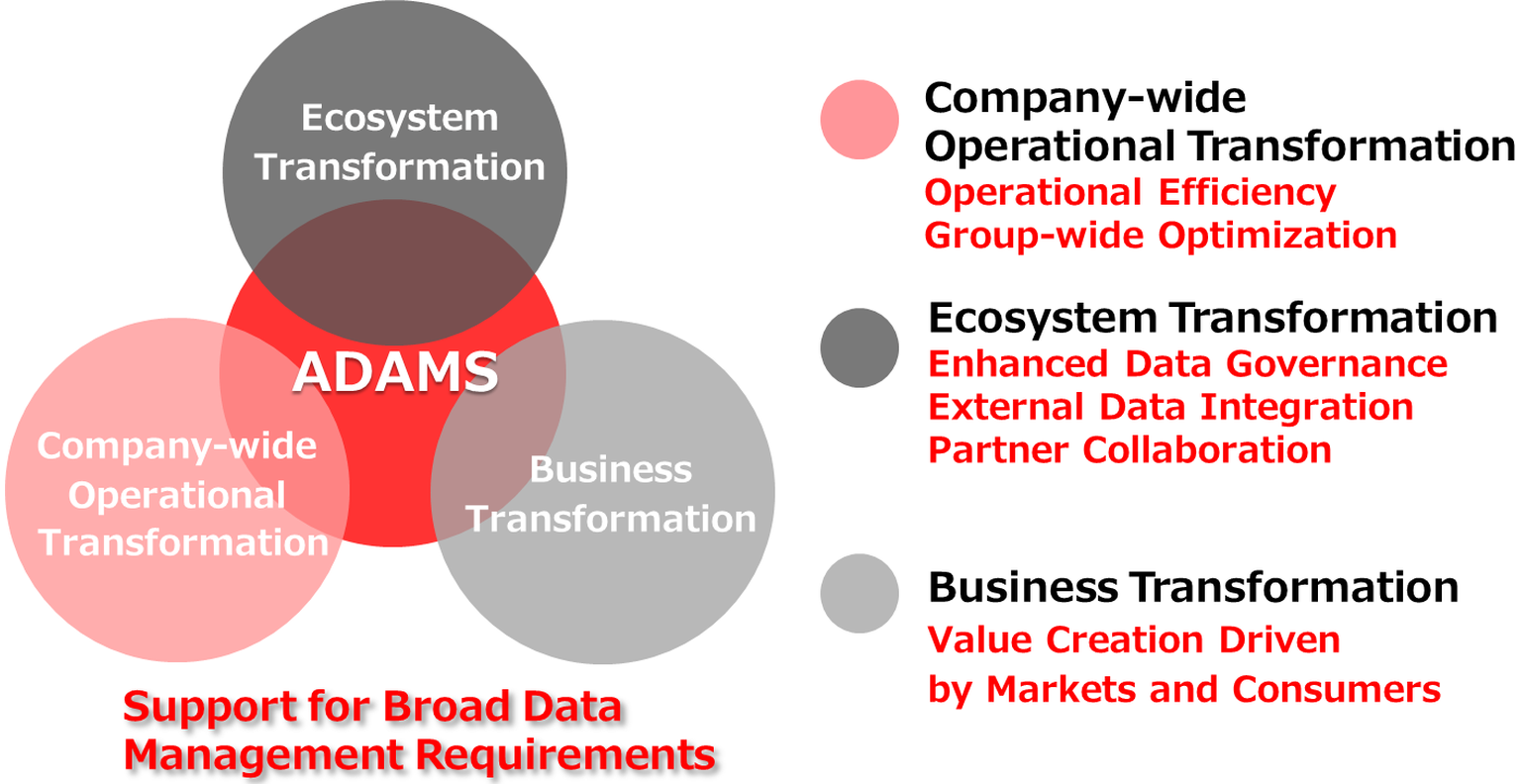
In contrast, the Ajinomoto Group has adopted an “n+m model” approach in which data, an intangible asset shared across the Group, is used and shared on a Group-wide basis. Under this approach, data is treated not as information for individual purposes, but as a shared corporate asset. By integrating, sharing, and linking data both internally and externally, we aim to maximize the comprehensive insights derived from data and translate them into value creation.
To achieve this, we are developing the systems, rules, and organizational structures required for effective data management.
As a specific example of ADAMS utilization, we began using ADAMS data in actual business operations in fiscal 2024. We have established an environment that enables one-stop access to and use of quantitative and financial data across the supply chain of our food business in Japan—including suppliers, factories, Ajinomoto, wholesalers, distribution channels, and consumers—as well as various master data, such as raw materials and products, customers, organizations, and employees. This has already generated tangible results. For example, we are working to optimize production planning and reduce inventory by estimating inventories of Ajinomoto products held by wholesalers and retailers, which had previously been difficult to capture. We are also automatically collecting and visualizing sales performance data provided by e-commerce channels to improve the accuracy and efficiency of sales and promotion planning.
(For details on this initiative, please refer to the Smart SCM diagram “SCM: Visualization of Distribution Inventory and Supply-Demand Optimization.”)
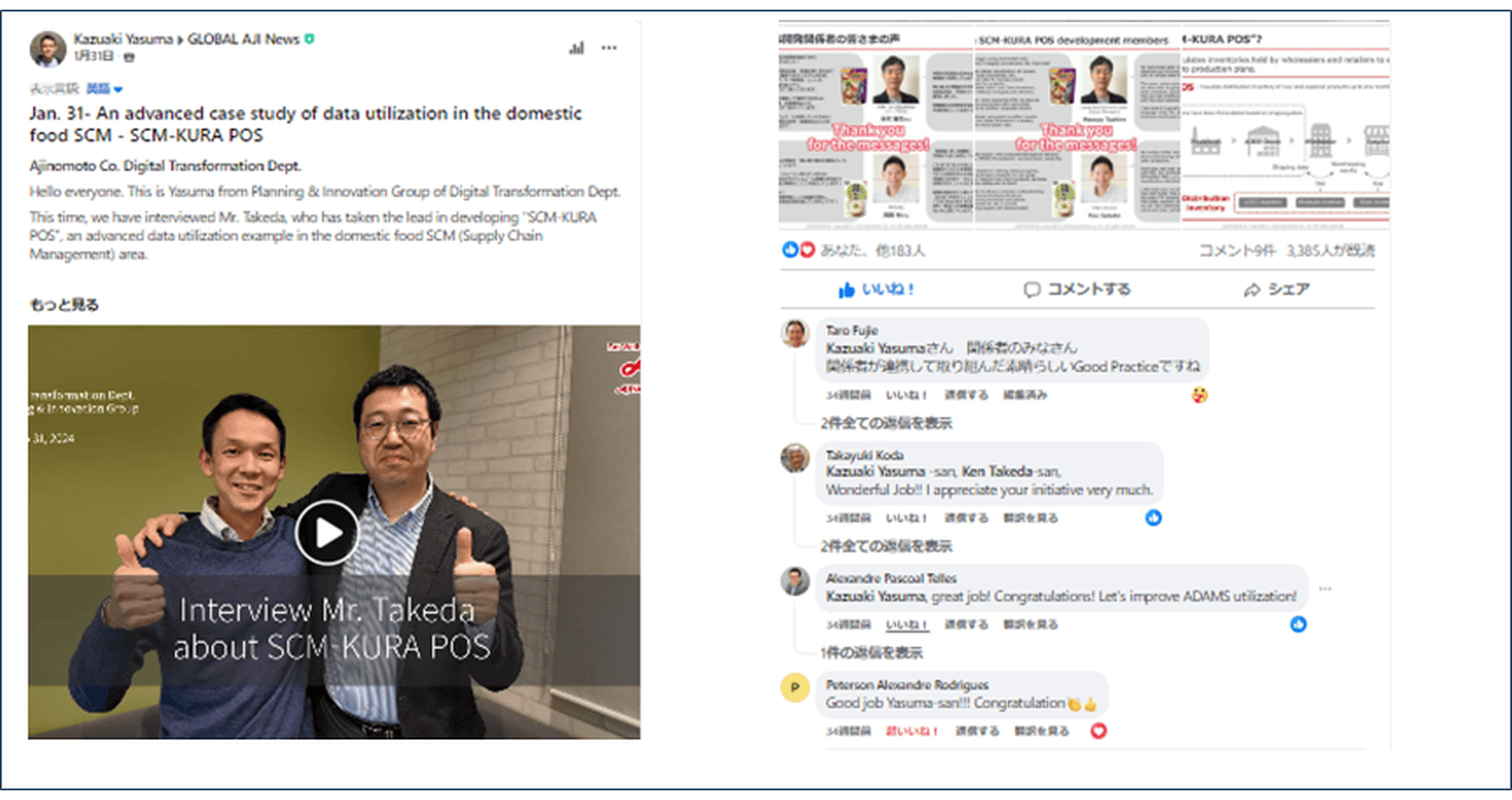
We also share these successful use cases with all Ajinomoto Group employees through videos posted on our internal social networking platform, helping to foster a data-driven culture across the Group.
■ Example of an Internal Social Media Post
- ● Overall Roadmap for Advancing Data Management
-
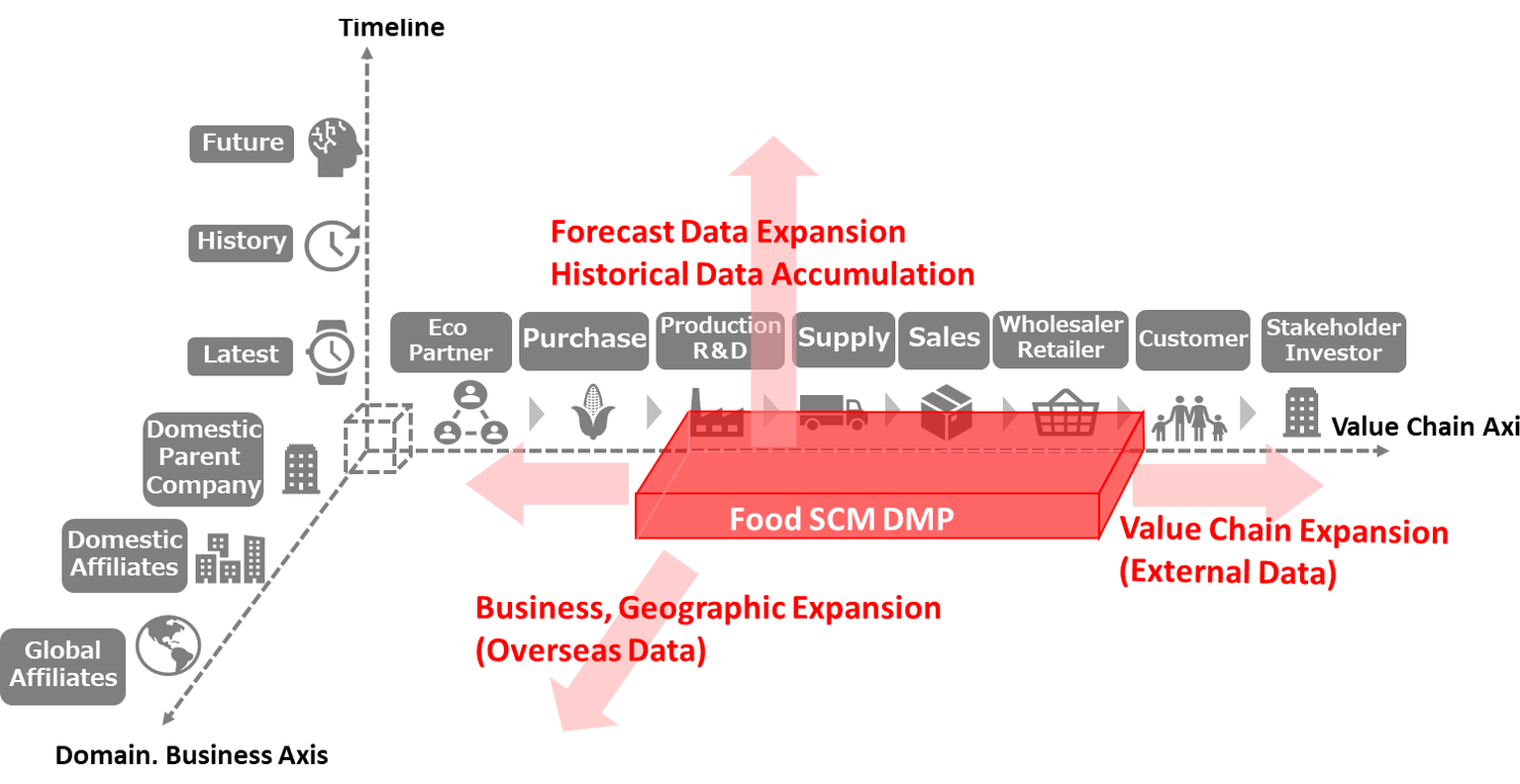
Basic Policy: Our roadmap is based on building a data platform that can respond rapidly to change by starting with the supply chain domain and gradually expanding the scope across businesses, regions, and the broader value chain. By enhancing rolling forecasts through S&OP and accumulating historical data to improve forecasting accuracy, we aim to significantly increase both the speed and quality of decision-making. Building on successful cases in Japan, we will integrate data from overseas Group companies to achieve global supply-demand optimization. We will also strengthen data connectivity with suppliers and distribution partners to promote data utilization across the entire ecosystem.
To support these initiatives, ADAMS system development and maintenance are principally handled in-house. We also adopt agile development methodologies to ensure agility and sustainability.
Initiatives with Overseas Group Companies: With a view to enabling data connectivity across the entire Group, including overseas operations, as well as with external partners, we have appointed data promotion leaders, or Data Officers, at overseas Group companies. We also hold monthly meetings to exchange information on advanced initiatives in each region and discuss Group-wide data management strategies and architecture.
External Collaboration and Talent Development: We are also adopting architectures that facilitate data connectivity and sharing with external ecosystem partners, while developing engineers capable of effectively utilizing advanced digital technologies.
Initiatives Toward AI-Ready Data: To develop data assets that contribute to improving AI accuracy and reliability while reducing associated risks, we will expand ADAMS into a data platform capable of integrating numerical data (structured data), various types of content (unstructured data), and the meaning and relationships of data (metadata).
In this way, the Ajinomoto Group regards accelerating data-driven decision-making as an important management priority. Through the development and utilization of a data platform centered on ADAMS, we are advancing data management across the entire Ajinomoto Group. As the world undergoes major digital transformation, we will continue to further enhance both the speed and quality of our management.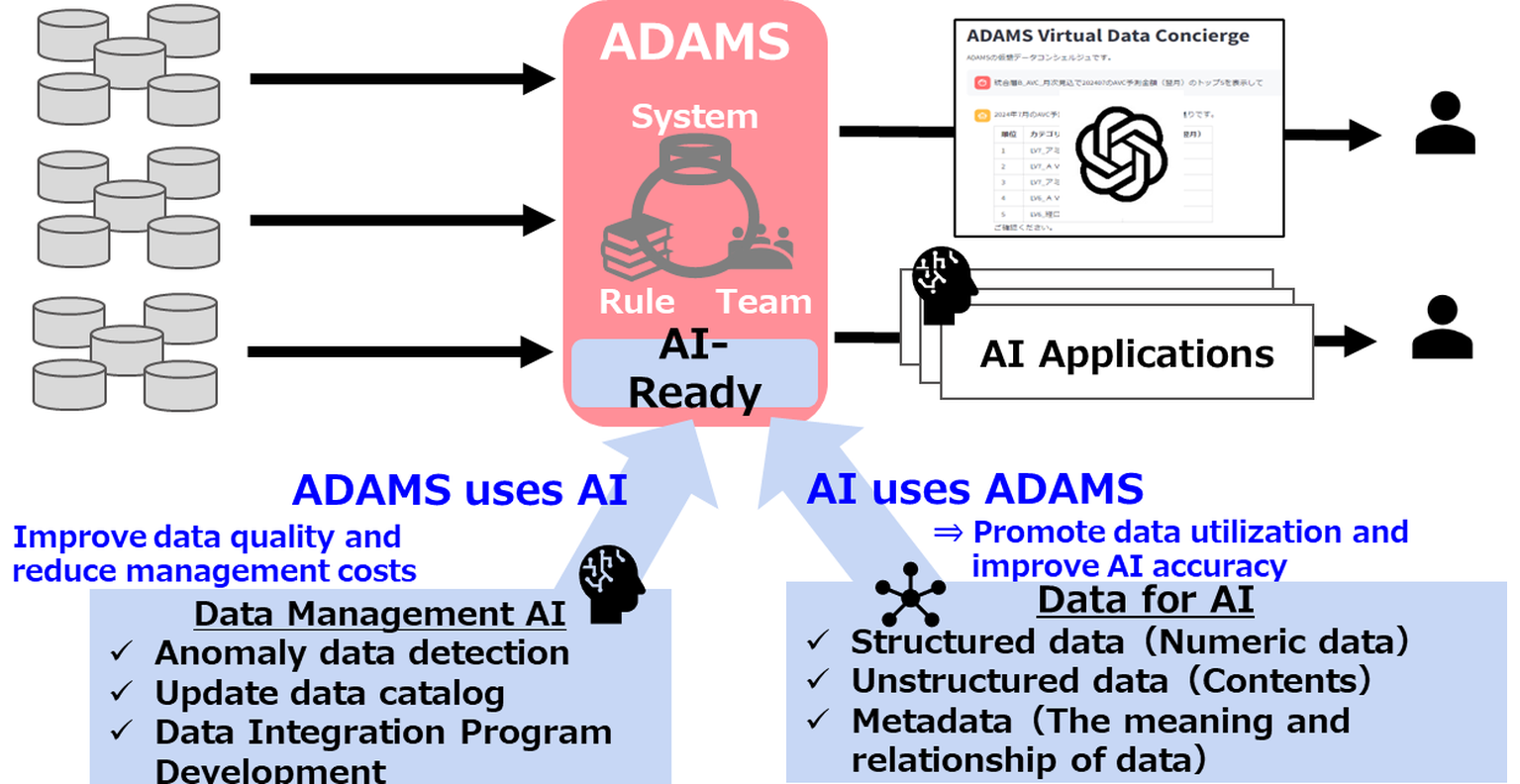
Related Materials
- ● DX Talent Development Program
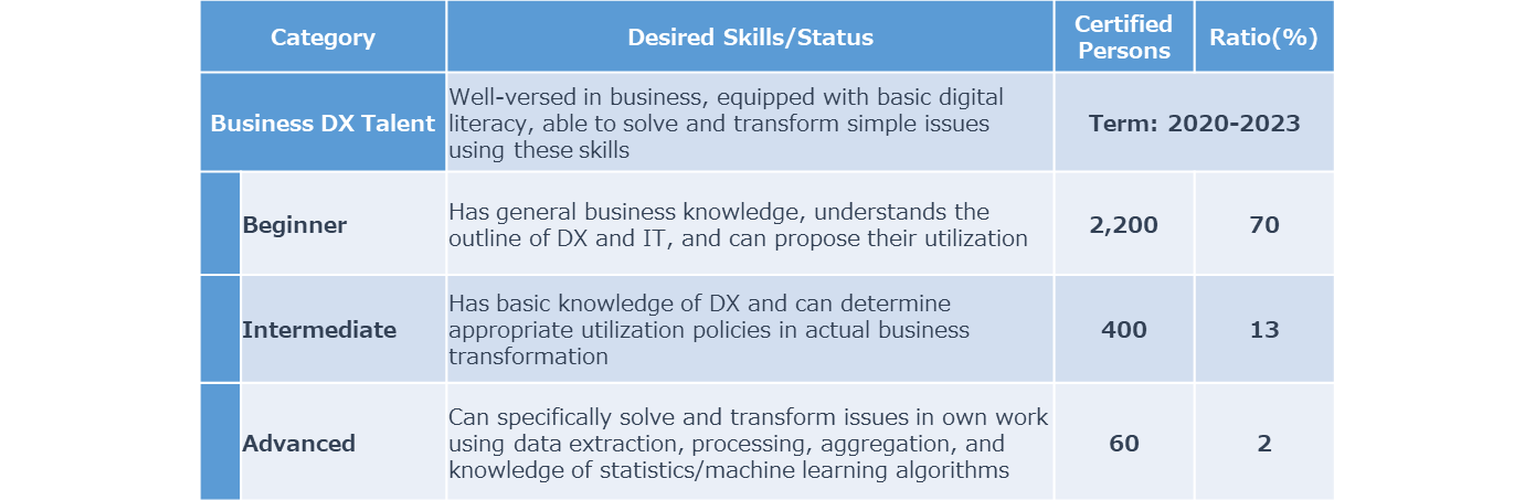
- To enhance the digital literacy of each employee and enable them to put DX into practice, Ajinomoto Co., Inc. launched its “Business DX Talent” development program in fiscal 2020. The program was voluntary and open to employees who chose to participate, with courses at beginner, intermediate, and advanced levels designed to be taken outside regular working hours. Over the four years through fiscal 2023, more than 80% of employees participated, and approximately 2,200 employees—equivalent to 70% of the workforce—received certification. The number of employees certified at the intermediate and advanced levels also increased, further strengthening the development of highly skilled DX talent.
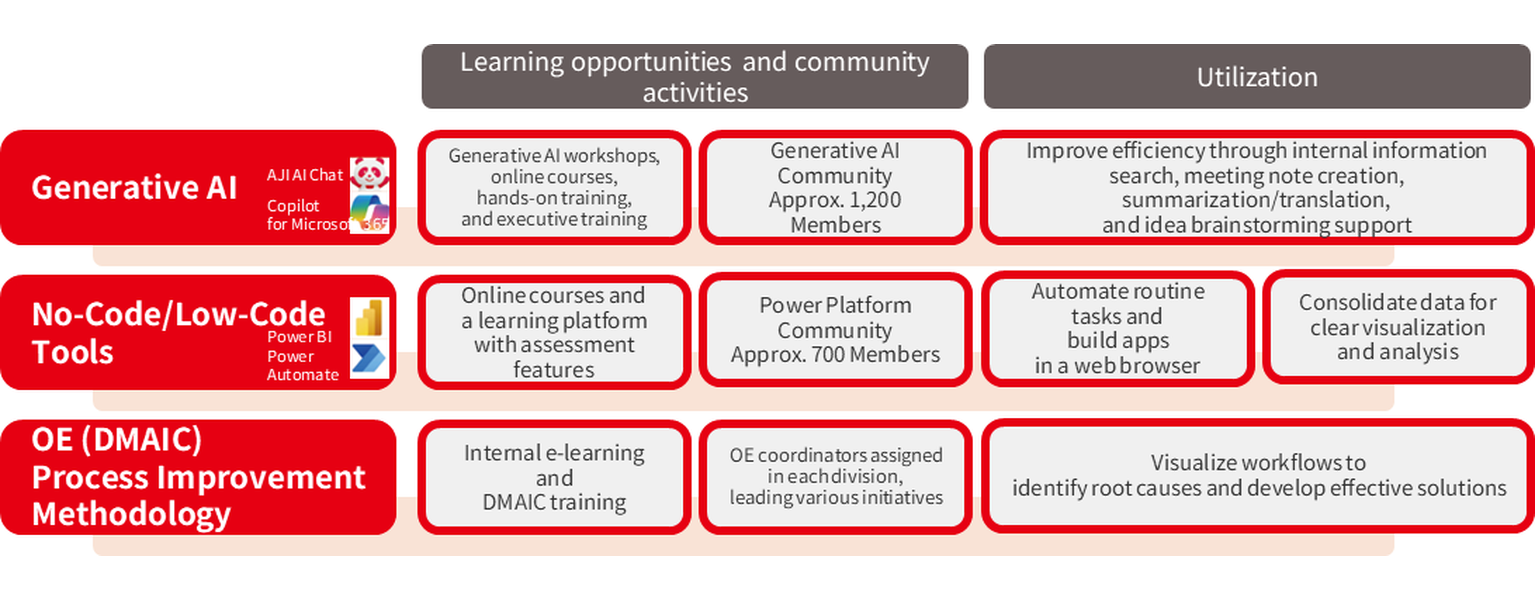
Since 2024, we have offered training programs covering generative AI, low-code tools, data analytics, and other areas with the aim of strengthening the use of digital technologies. We are also implementing OE (Operational Excellence) activities to eliminate inefficiencies and standardize business processes. To further encourage individual skill development, we are considering the introduction of digital badges. (For details, please refer to the section on AI and Digital Utilization.)
- ● Recruitment of DX Talent
- In line with our DX promotion strategy and the business needs of each function, we recruit both new graduates and experienced professionals. In particular, as business model transformation progresses and AI technologies continue to advance, demand is increasing for digital marketing talent, including engineers, as well as professionals capable of utilizing AI. We are therefore strengthening our talent base through both new graduate and mid-career recruitment.
- ● DX/IT Skill Standards
-
Beginning in fiscal 2024, we defined role-based “Skill Standards” as part of our efforts to translate the knowledge employees have acquired into more practical business improvements. For all employees, including management, we established the DX Literacy Standard as the set of skills that all business professionals should acquire. Building on this literacy standard, we also established the DX Promotion Skill Standard and IT Skill Standard as specialized skill frameworks for employees responsible for driving DX and IT initiatives. These standards were developed based on the DSS and ITSS frameworks of the Information-technology Promotion Agency, Japan (IPA).
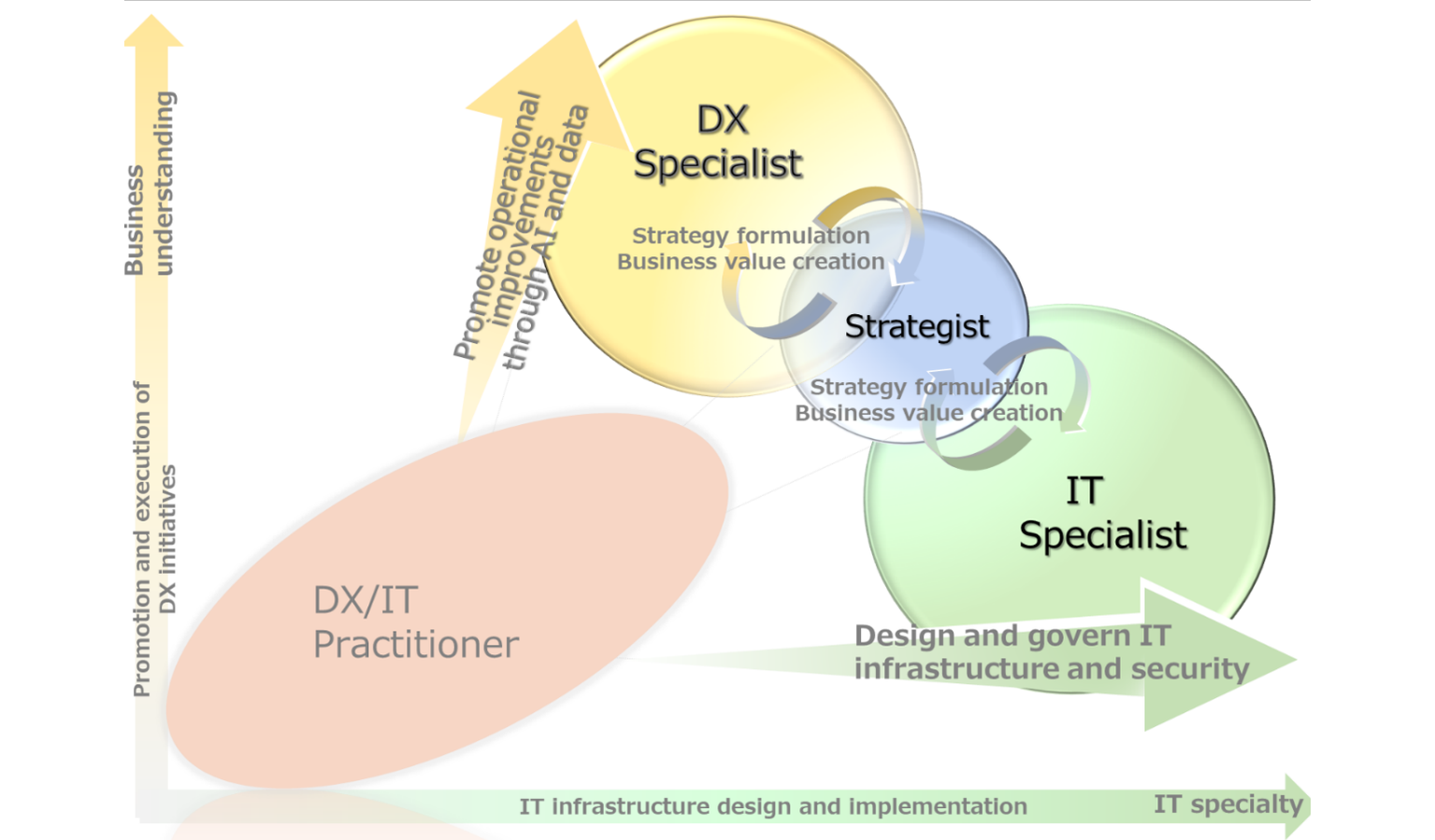
Including the newly established AI Specialist category, we have defined nine DX/IT categories, with multiple roles under each category. These roles are reviewed and updated annually based on the needs of relevant functions and the actual circumstances of the Company. At a higher level, we have also defined the DX/IT Strategist role for talent responsible for formulating comprehensive strategies.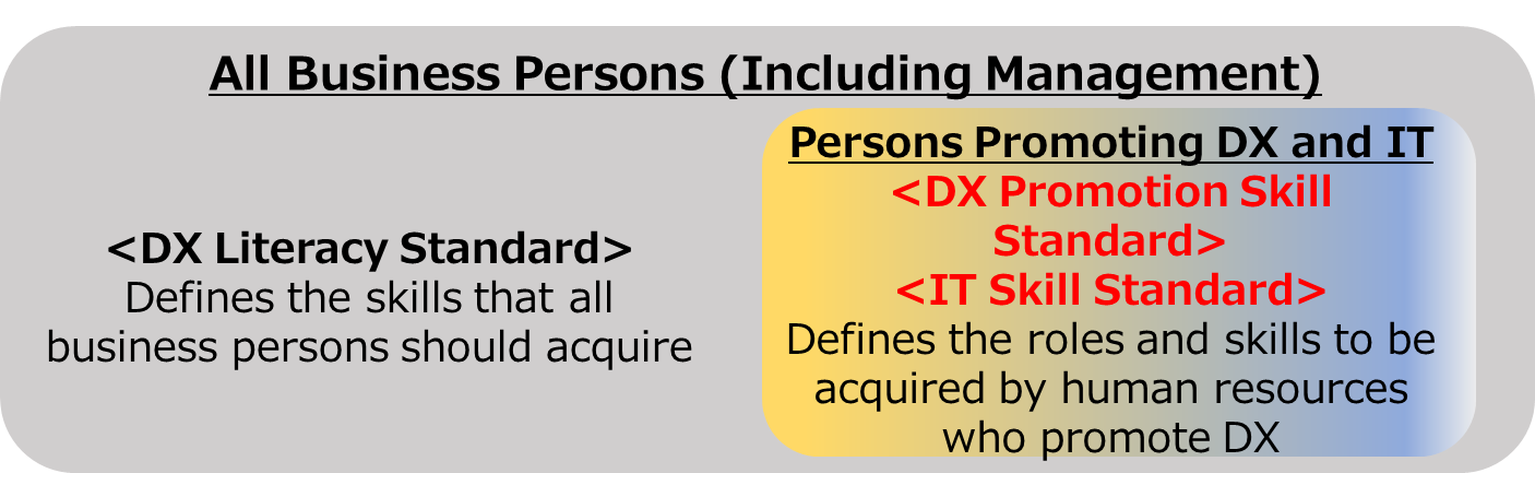
As part of our talent development process, employees engaged in DX/IT-related work are defined as DX/IT Practitioners. Based on each individual’s business needs, experience, and motivation, their skill levels are registered and visualized in accordance with the defined Skill Standards, enabling systematic development toward specialist roles.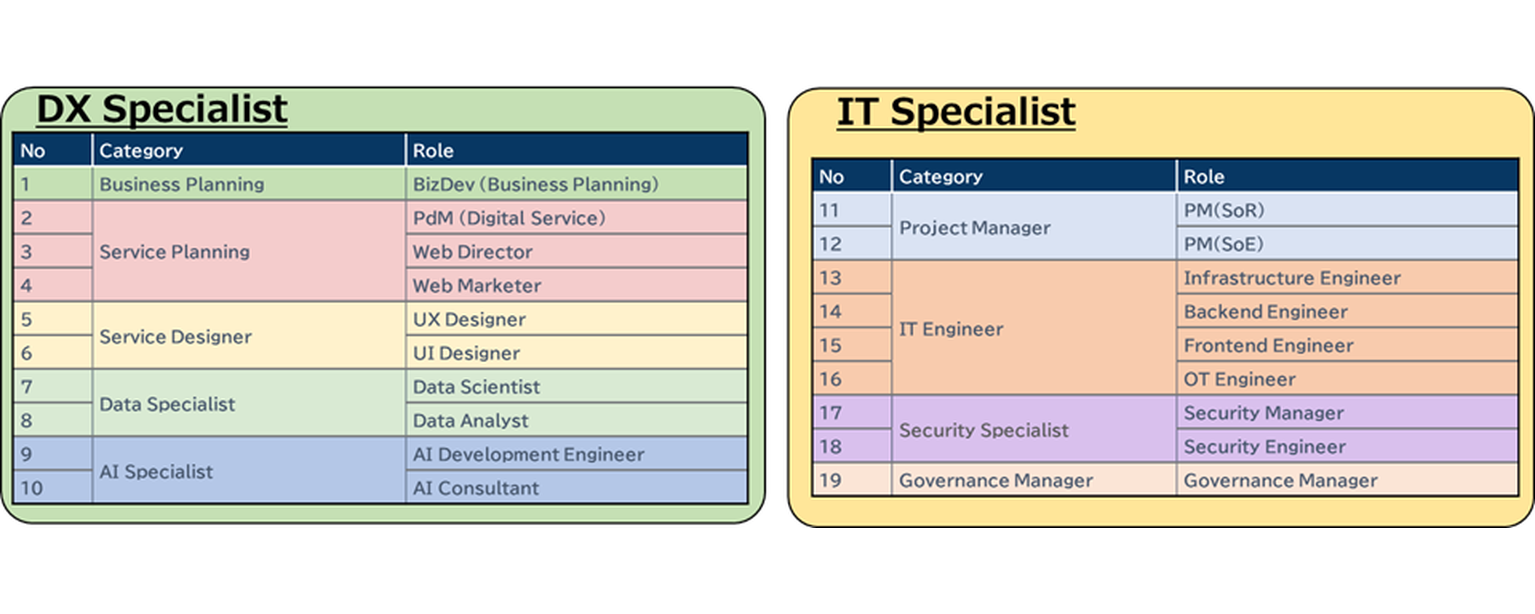
At the same time, we are also developing DX/IT Strategists, who are responsible for advancing and elevating DX and IT talent capabilities. Through this DX/IT talent management system, we support the development of individual employees and facilitate rotations both within Japan and globally. The system is also utilized to strengthen recruitment of specialized talent in areas of growing business demand, as well as the recruitment of new graduates.
Related Materials
-
To advance data-driven management, we are strengthening initiatives to promote the use of AI and digital technologies in both business operations and individual work.
Beginning in fiscal 2026, each organization and individual will set goals that incorporate initiatives aimed at improving productivity through the use of data, AI, and digital technologies, including both greater operational efficiency and more sophisticated ways of working. This will help employees take greater ownership of AI and digital utilization. Outstanding initiatives will also be recognized through the AI & Digital Utilization Awards to further enhance motivation. - ● Initiatives to Promote Individual Utilization
- We promote the use of various tools and approaches according to business needs by providing learning opportunities and encouraging voluntary community activities. Employees are empowered to make use of digital technologies themselves to improve operational efficiency and create new value. Because operational issues at frontline workplaces cannot be solved through digital technologies alone, teams promoting OE activities—using DMAIC, a Lean Six Sigma business improvement methodology—work together with DX teams to address operational challenges
- ● Initiatives to Promote Business Utilization
-
To improve business productivity through more efficient and effective use of AI and digital technologies, we established the Digital Utilization Promotion Team within the DX Department. The team centrally manages and visualizes initiatives that had previously been conducted independently, including the identification of use cases to be implemented on ADAMS, support for various business improvement activities, low-code tool initiatives, and generative AI utilization projects. By aligning support policies and levels from an overall optimization perspective, we are promoting more effective use of AI and digital technologies.
One specific example is a business improvement project for a particular business division. Members with deep knowledge of the business were assigned to the project and worked together with OE members and external resources familiar with the business. Within a short period, the team visualized the existing business processes, designed the desired future-state processes, and simplified what had previously been complex workflows. At the same time, activities such as Excel-based work and internal master data registration requests were standardized and partially automated. These improvements are expected to reduce annual workloads by more than approximately 1,000 hours. Going forward, we will pursue further improvements through the use of generative AI and other technologies.
- ● Promotion of AI Utilization
-
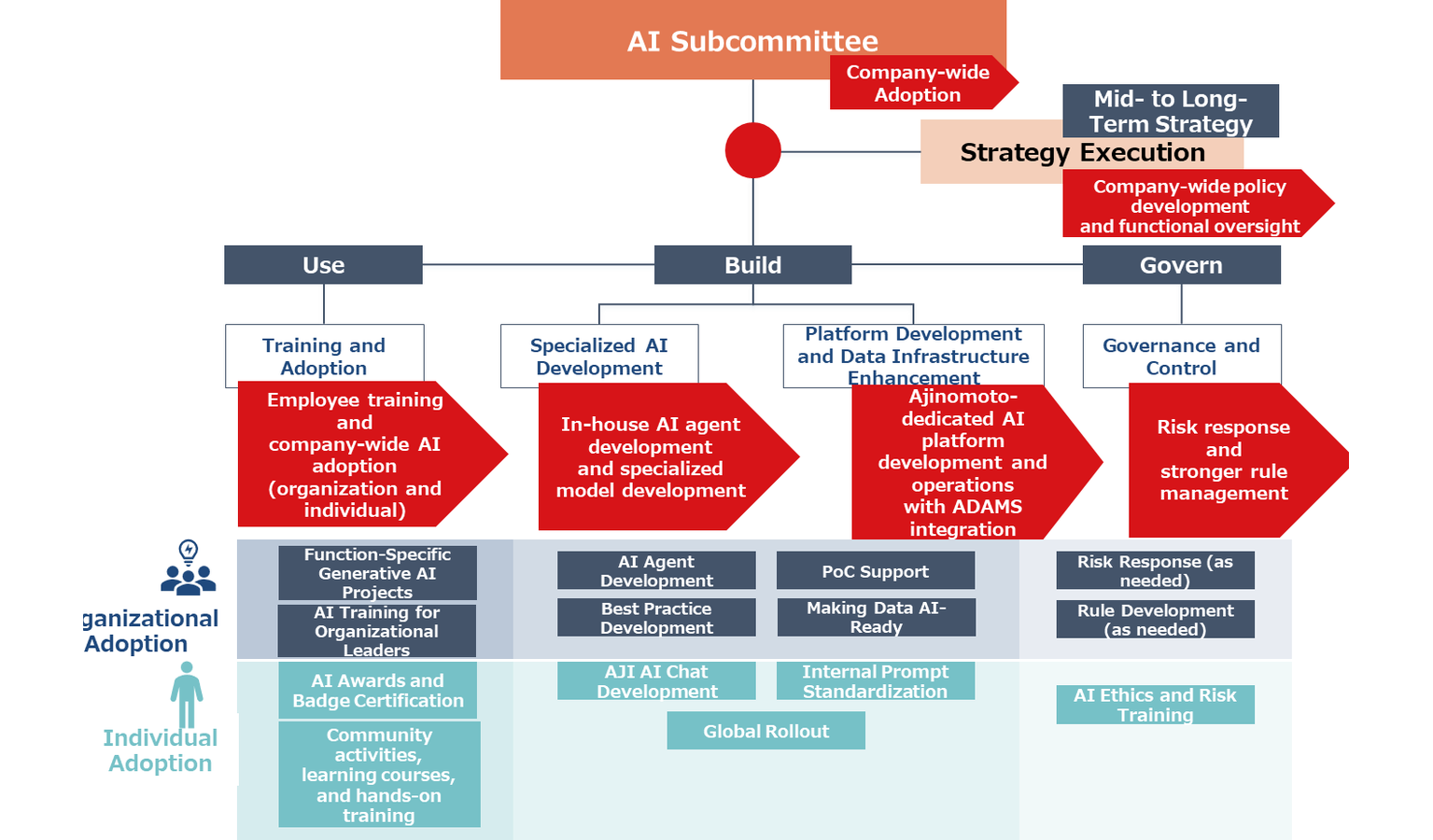
To promote and oversee AI utilization across the Company, we established an AI Subcommittee within the DX Committee.
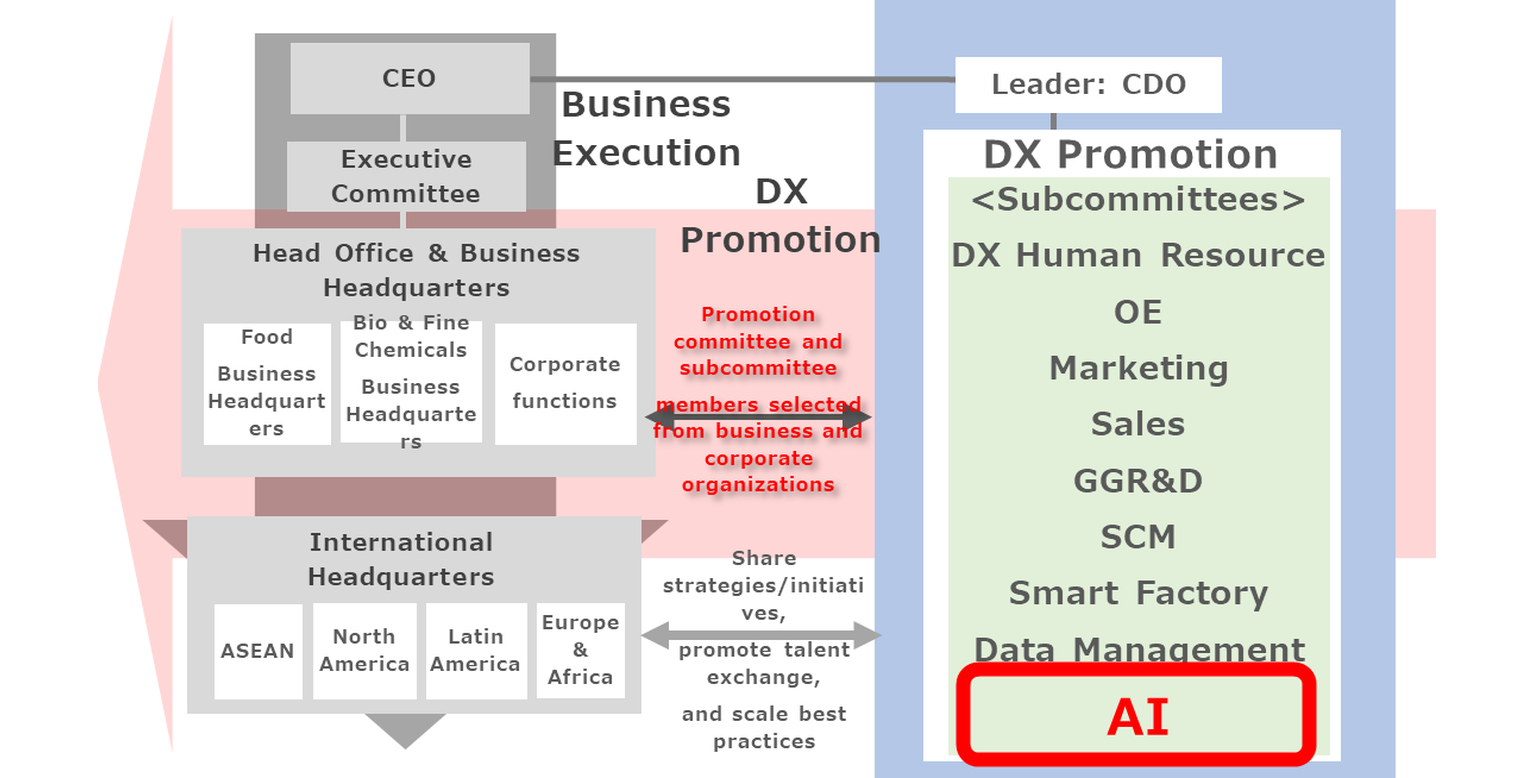
While the AI Subcommittee Secretariat leads the overall strategy, we are promoting Company-wide AI initiatives through a CoE organization that coordinates three areas of activity: “Use” (education and promotion of utilization), “Build” (platform development, data infrastructure development, and development of specialized generative AI solutions), and “Protect” (controls and governance).
We are also visualizing the use of both conventional AI and generative AI across the Company to facilitate information sharing and the horizontal deployment of successful practices.
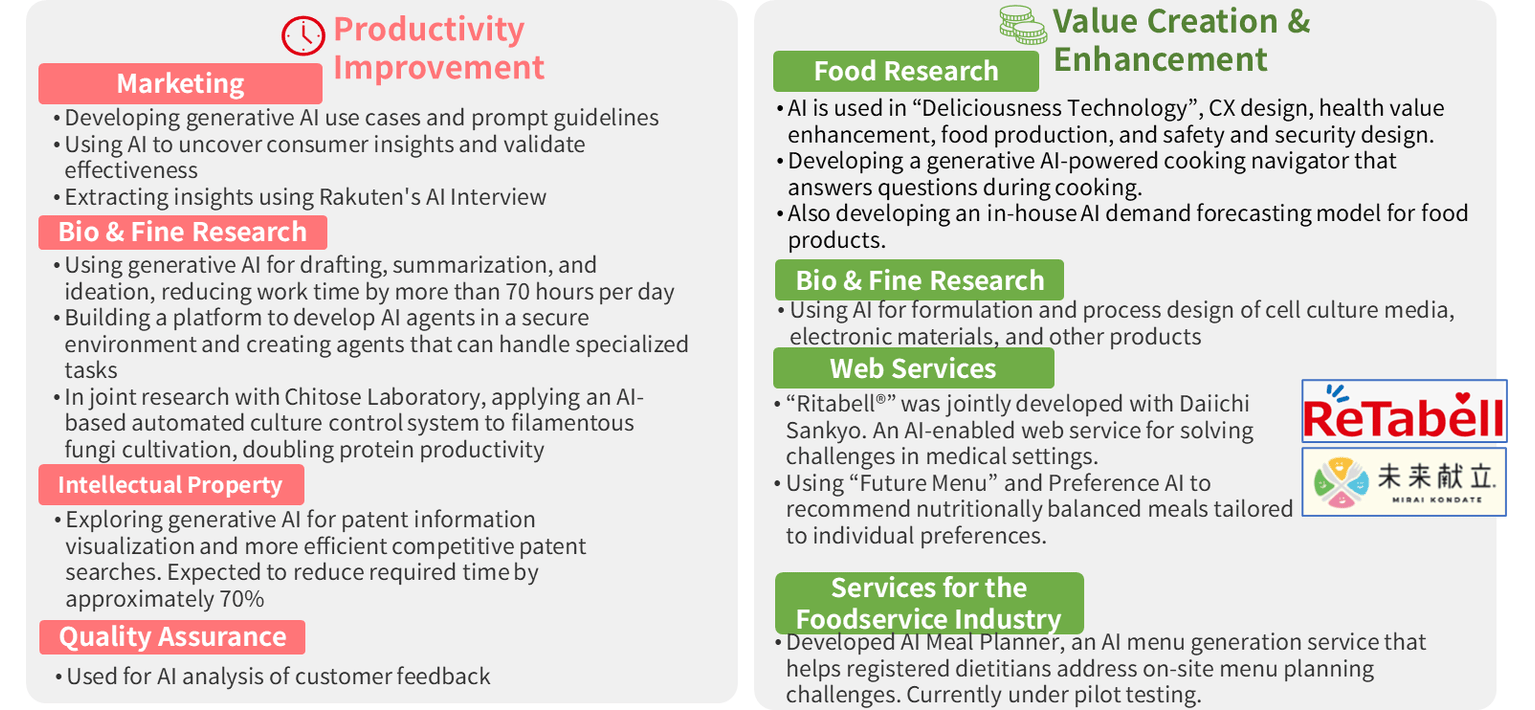
■ AI Use Cases: Conventional AI and Generative AI
-
Various departments have long used conventional AI technologies, including machine learning, and in recent years the use of generative AI has also expanded. Approximately 80 themes are currently underway, some of which are shown below.
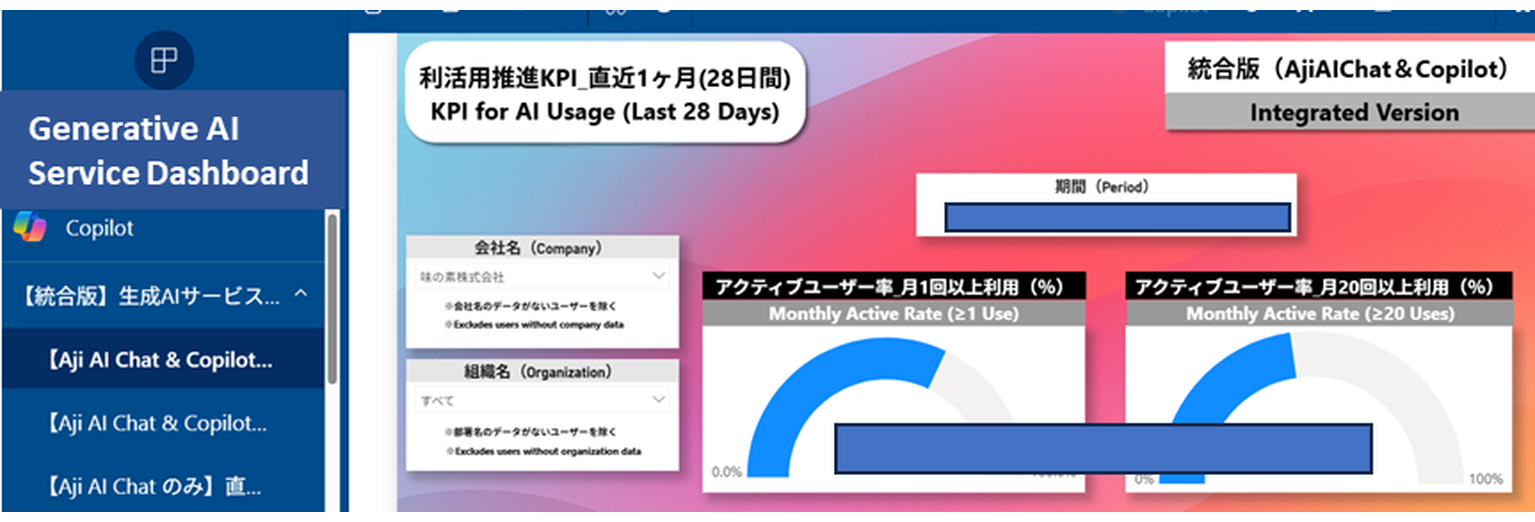
■ Internal Generative AI Platforms: “AJI AI Chat,” “Microsoft 365 Copilot,” and “AJIBO”
-
In October 2023, Ajinomoto Co., Inc. introduced AJI AI Chat, a generative AI service dedicated to internal use.
At the same time, we established security standards for generative AI utilization, creating an environment in which employees can safely use generative AI. We continue to promote adoption while introducing new models and enhancing functionality, including RAG capabilities. We are also gradually expanding availability globally in response to the needs of affiliated companies in Japan and overseas.
In addition, licenses for Microsoft 365 Copilot are provided to employees who wish to use the service, and we are promoting its adoption. We have also developed and deployed AJIBO, a chatbot designed to retrieve internal company information.

The utilization status of AJI AI Chat and Microsoft 365 Copilot is published company-wide through a dashboard. The dashboard visualizes tool utilization at the group level within each organization, enabling employees to view the status of their own organization, other organizations, and affiliated companies in Japan. This information is used to further encourage adoption. As of December 2025, approximately 70% of employees at Ajinomoto Co., Inc. were monthly active users.
■ Promotion of Generative AI Utilization
-
We initially focused on measures to promote individual utilization among employees and management. Beginning in fiscal 2025, however, we strengthened initiatives aimed at organization-wide utilization. Previously, individual departments independently engaged external vendors to develop generative AI solutions. Today, under the leadership of the DX Department’s Digital Utilization Promotion Team and the AI Subcommittee of the DX Committee, we are implementing business-specific generative AI utilization projects as well as the in-house development of generative AI solutions for specific business operations, including the development of AI agents.
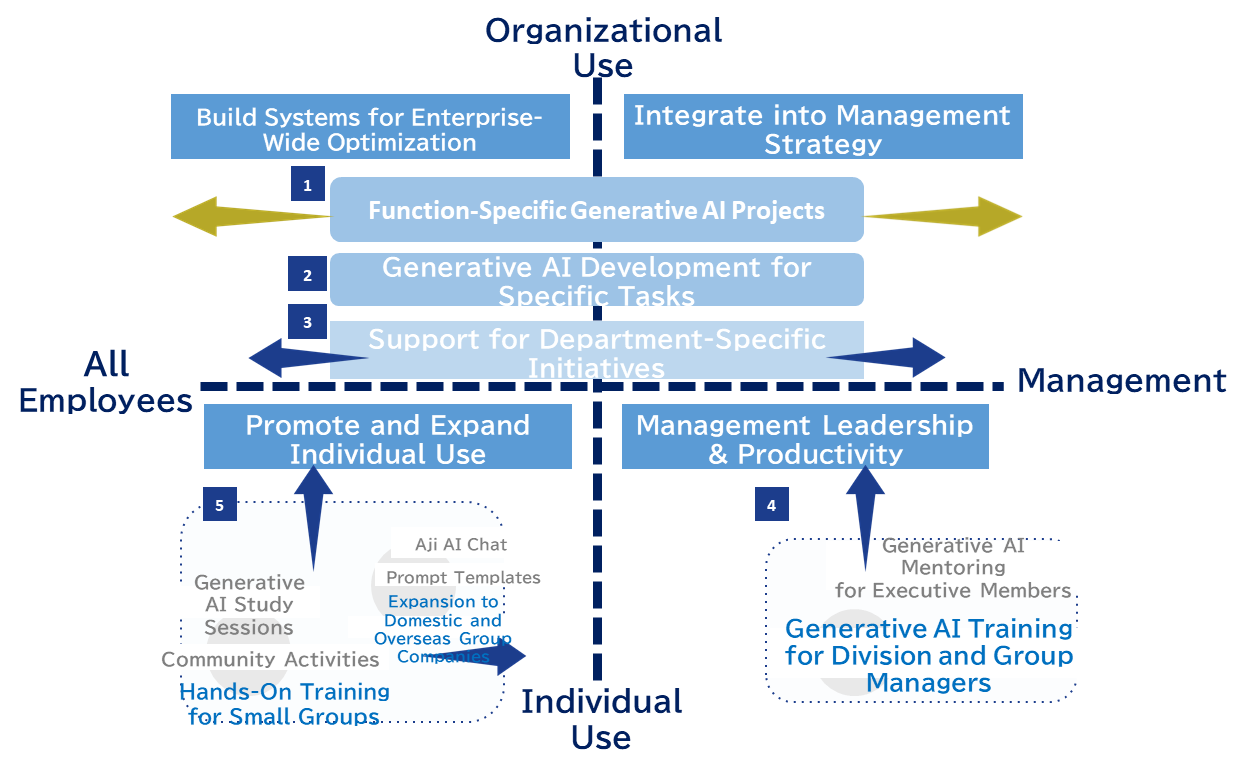
■ Initiative Example: Business-Specific Generative AI Utilization Project
1 Organizational Utilization
-
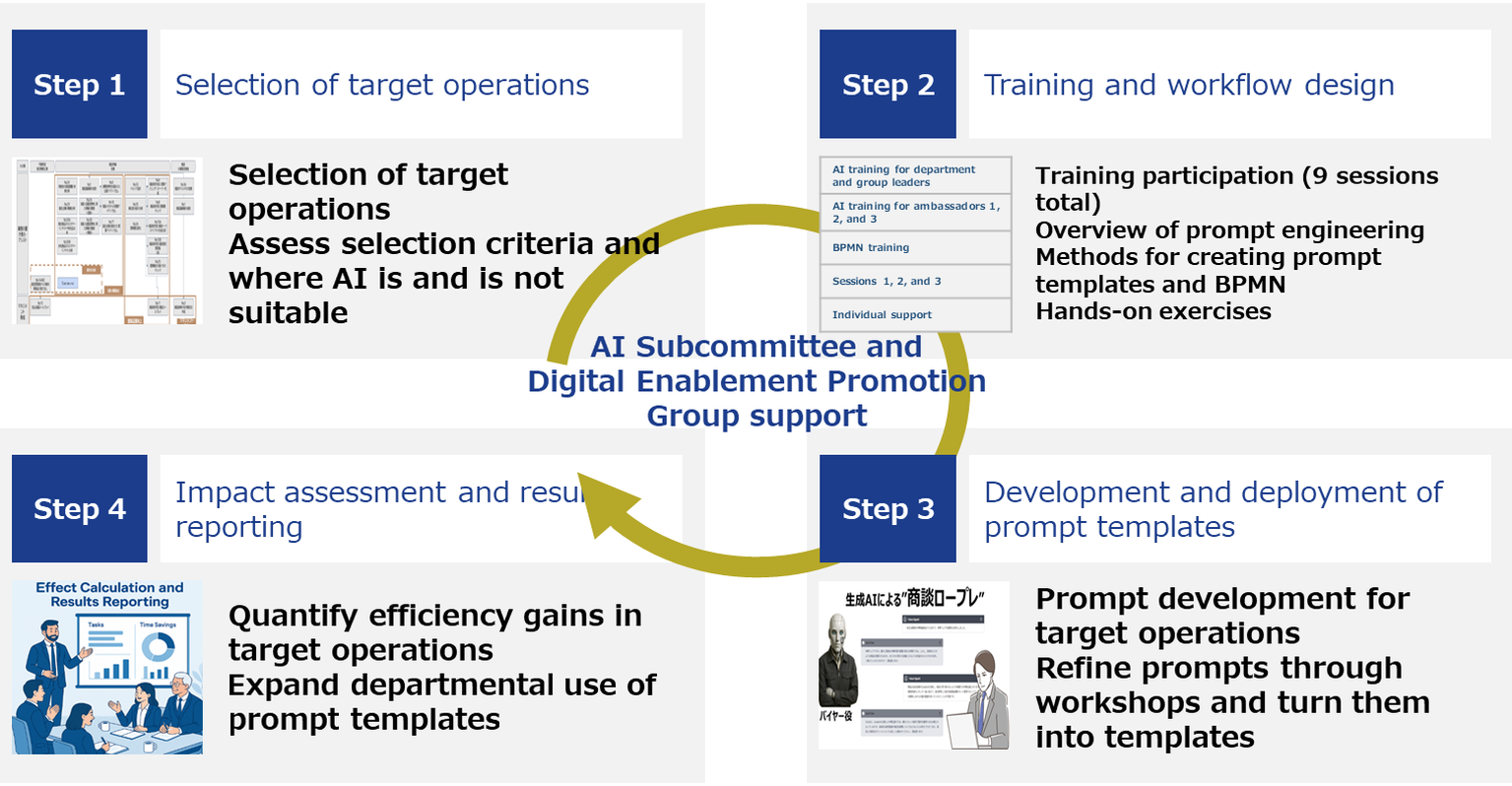
After visualizing business processes in the form of workflows, we identify areas where generative AI can be applied from OE and BPR perspectives. Members of the relevant department then learn prompt development techniques and create and refine prompts themselves, thereby also developing internal talent. The resulting prompts are standardized as common departmental prompt templates and utilized across the organization, enabling optimization and utilization at the department-wide level. At the same time, we consider the use of ADAMS, our data management platform, and RPA tools, and where appropriate, develop these solutions into AI agents.
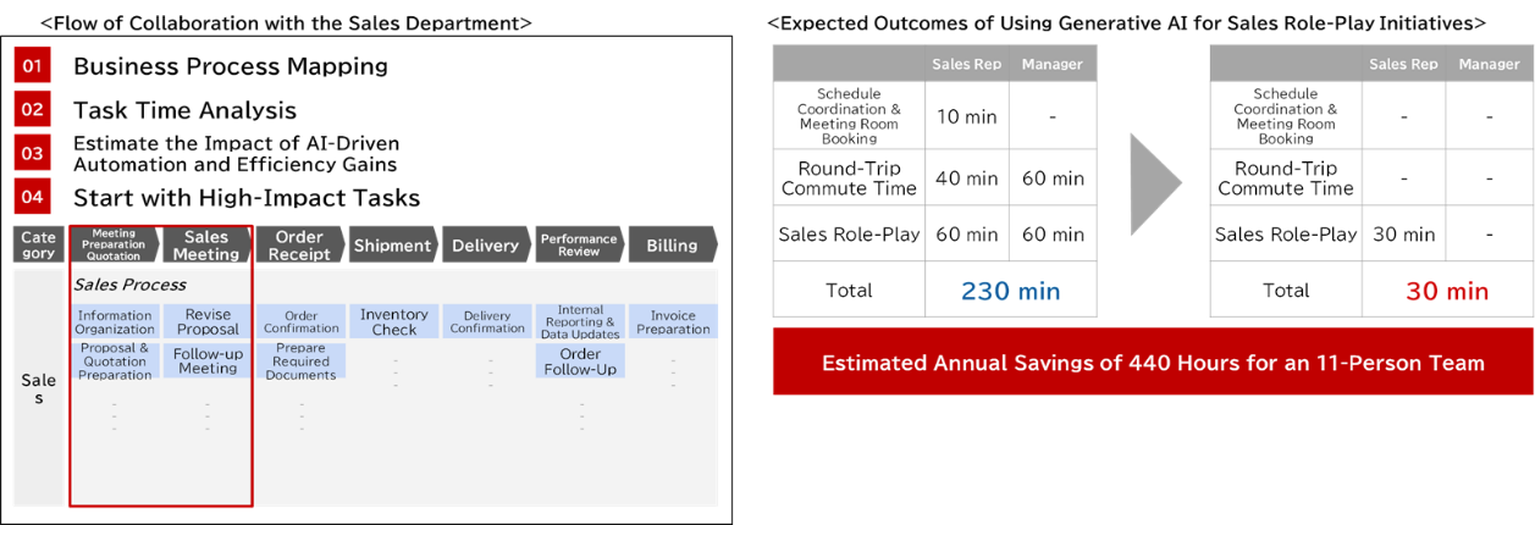
One initiative in the sales department was conducted with the objective of improving the efficiency of internal administrative work and increasing time spent in customer meetings. The project visualized business processes, analyzed the time required for each task, and estimated the potential impact of automation and efficiency improvements through AI. Generative AI was then applied to high-impact activities through the development and refinement of prompt templates. In particular, improvements in routine internal administrative tasks were confirmed to increase the amount of time available for external sales activities.
■ Initiative Example: Business-Specific Generative AI Utilization Project
4 Individual Utilization × Management
-
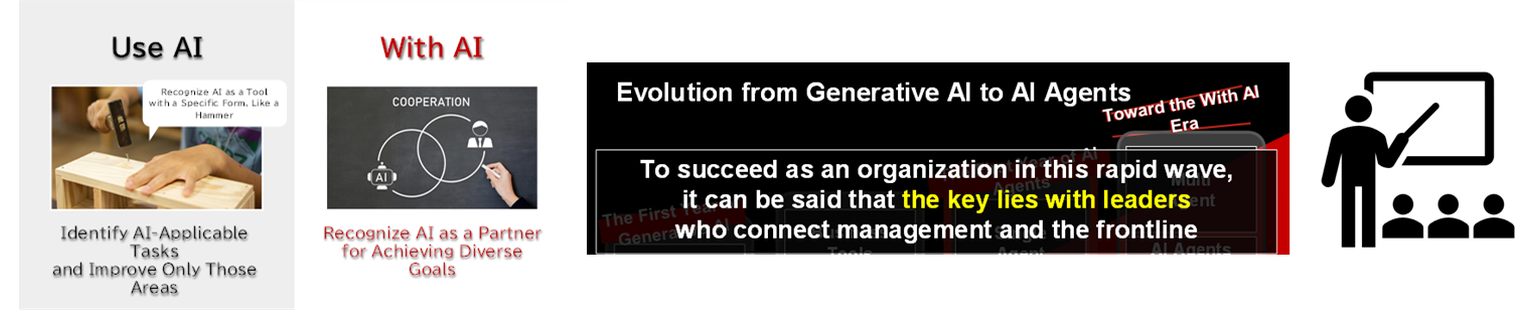
When transforming business operations through new technologies, changing the mindset of middle management is critical.
As part of the business-specific generative AI utilization project, training sessions were conducted for organizational leaders and group leaders.
After explaining broader trends in generative AI, the training emphasized the importance of organizational leaders taking the initiative in using generative AI themselves and promoting its adoption within their organizations.
The content was made widely available to management, organizational leaders, group leaders, and general employees. More than 80% of participants responded to the survey, and the training received highly positive feedback.
■ Initiative Example: Business-Specific Generative AI Utilization Project
4 Individual Utilization × Management
-
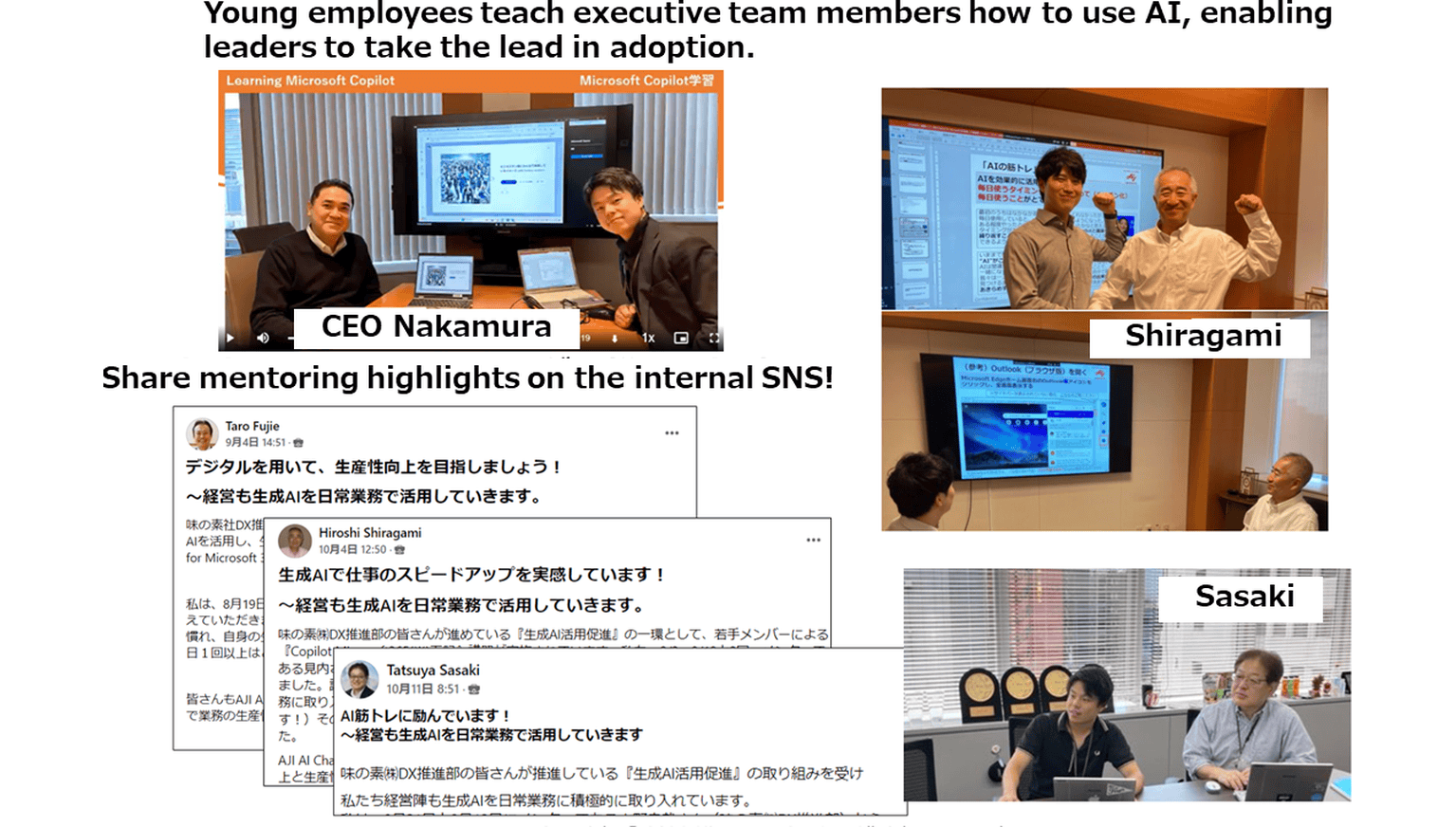
Younger employees teach management members how to use AI, while executives themselves take the initiative in applying it through reverse mentoring. This also promotes communication between senior management and younger, digitally native employees who would otherwise have relatively few opportunities to interact.
One initiative in the sales department was conducted with the objective of improving the efficiency of internal administrative work and increasing time spent in customer meetings. The project visualized business processes, analyzed the time required for each task, and estimated the potential impact of automation and efficiency improvements through AI. Generative AI was then applied to high-impact activities through the development and refinement of prompt templates. In particular, improvements in routine internal administrative tasks were confirmed to increase the amount of time available for external sales activities.
Related Materials
- ● Initiatives to Strengthen Cybersecurity
-
The Ajinomoto Group handles customer information and confidential Company information with strict care. To ensure information security across the Group, we have established the Group Policy on Information Security, together with related information security regulations, various standards and guidelines, and the IT environment necessary to support their operation. We have also established a framework under which any information security incident or other emergency occurring within an organization of Ajinomoto Co., Inc. or a Group company can be promptly escalated to the Chief Executive Officer and addressed appropriately. In addition, as part of the Group-wide enhancement of our BCP (Business Continuity Planning), we have established systems and procedures for information systems in cooperation with major vendors. We also conduct regular drills, approximately once a year, in preparation for large-scale natural disasters and cyberattacks.
Ajinomoto Co., Inc. also provides regular information security training for officers and employees. In fiscal 2024, we conducted an Information Security Knowledge Test and Targeted Email Attack Training. The Information Security Knowledge Test was delivered via e-learning and completed by 4,159 participants, representing a participation rate of 91%. Targeted Email Attack Training was conducted twice, as in previous years. In addition, Ajinomoto Co., Inc. conducts annual information security inspections at each workplace. Key inspection items include basic information-handling practices, such as the management of IT equipment, confidential information, and personal information. The use and management of external cloud services are also reviewed annually.
Related Materials