Actions Toward No Deforestation
1. Purpose of the Ajinomoto Group’s Commitment to No Deforestation
The Ajinomoto Group’s business is built on a sound agrifood system, and on the rich global environment that supports this system.
At the same time, deforestation is worsening globally, driven by factors such as land-use changes associated with food production. The loss of natural capital caused by deforestation not only accelerates climate change and biodiversity loss, but also seriously impacts the livelihoods of local communities. We recognize that these impacts undermine the sustainability of the agrifood system and pose a significant risk to the very foundation of our business, including with respect to the stable procurement of raw materials and the relationships of trust with local communities.
Based on this understanding, as a company that handles food resources, the Ajinomoto Group believes it has a responsibility to prevent and eliminate deforestation within its own supply chain. We will work in cooperation with our stakeholders to promote the realization of no deforestation in our supply chain, thereby simultaneously achieving natural regeneration, coexistence with local communities, and sustainable business growth.
This initiative is positioned as part of the Ajinomoto Group's materiality “Prevention of deforestation,” which underpins the Group’s goal of “Achievement of a sustainable global environment.”
2. Commitment to No Deforestation
The Ajinomoto Group has committed to no deforestation across its primary deforestation-linked commodities—palm oil, soy, beef, and paper—with a target date of December 31, 2025.
Furthermore, starting in fiscal year 2026, we will add coffee to the scope and strengthen our efforts toward realizing no deforestation in our supply chain.
“No deforestation” means not sourcing raw materials produced on land where deforestation or forest degradation has occurred since December 31, 2020. "Deforestation-free" refers to the state that commodity production or sourcing does not cause or contribute to deforestation.
3. Progress Toward No Deforestation
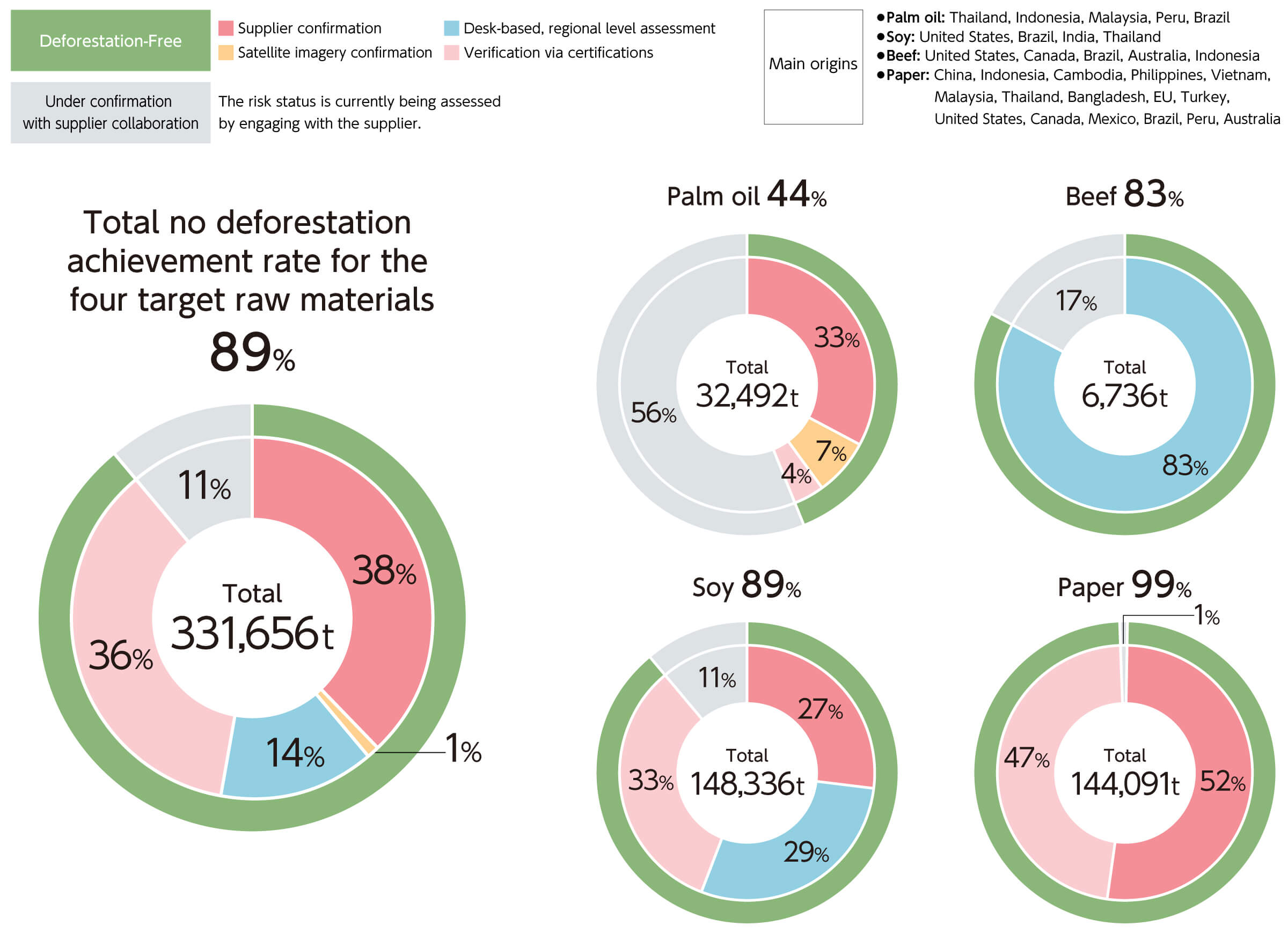
As of the end of December 2025, 89% of the Group’s procurement volume of palm oil, soy, beef, and paper*1, *2 has been confirmed to be deforestation-free (based on the procurement results for FY2024).*3
No deforestation achievement rate
- *1We will disclose the progress for coffee in the future.
- *2Currently, based on the prioritization approach promoted by the Accountability Framework initiative (AFi), which SBTi recommends as a reference for no-deforestation actions, we are advancing initiatives in phases targeting our major products that are derived from palm oil, soy, beef, and paper.
These targeted products include:- • Palm oil: palm oil, palm kernel oil, and derivatives
- • Soy: defatted soybeans, soybean oil, and soy protein
- • Beef: beef (meat products)
- • Paper: Paper used for containers and packaging
The figures in the table were calculated based on the procurement volumes of these major products by the prioritized affiliates (based on actual procurement volumes for FY2024). Note that although the calculations currently exclude other products derived from the target raw materials that are not within the scope of our efforts at this time, as well as upstream feed materials used in beef production, we do plan to sequentially consider expanding the scope going forward as our efforts progress and the situation changes. - *3For certain materials, estimates include values based on supplier-provided information on suppliers’ overall management systems and operational performance. These are calculated based on assumptions that we judged to be reasonable in light of communication with such suppliers. Note that such calculations are in accordance with our current calculation policy, and we will continue to refine our calculation methods going forward.
Deforestation-Free Verification Methods
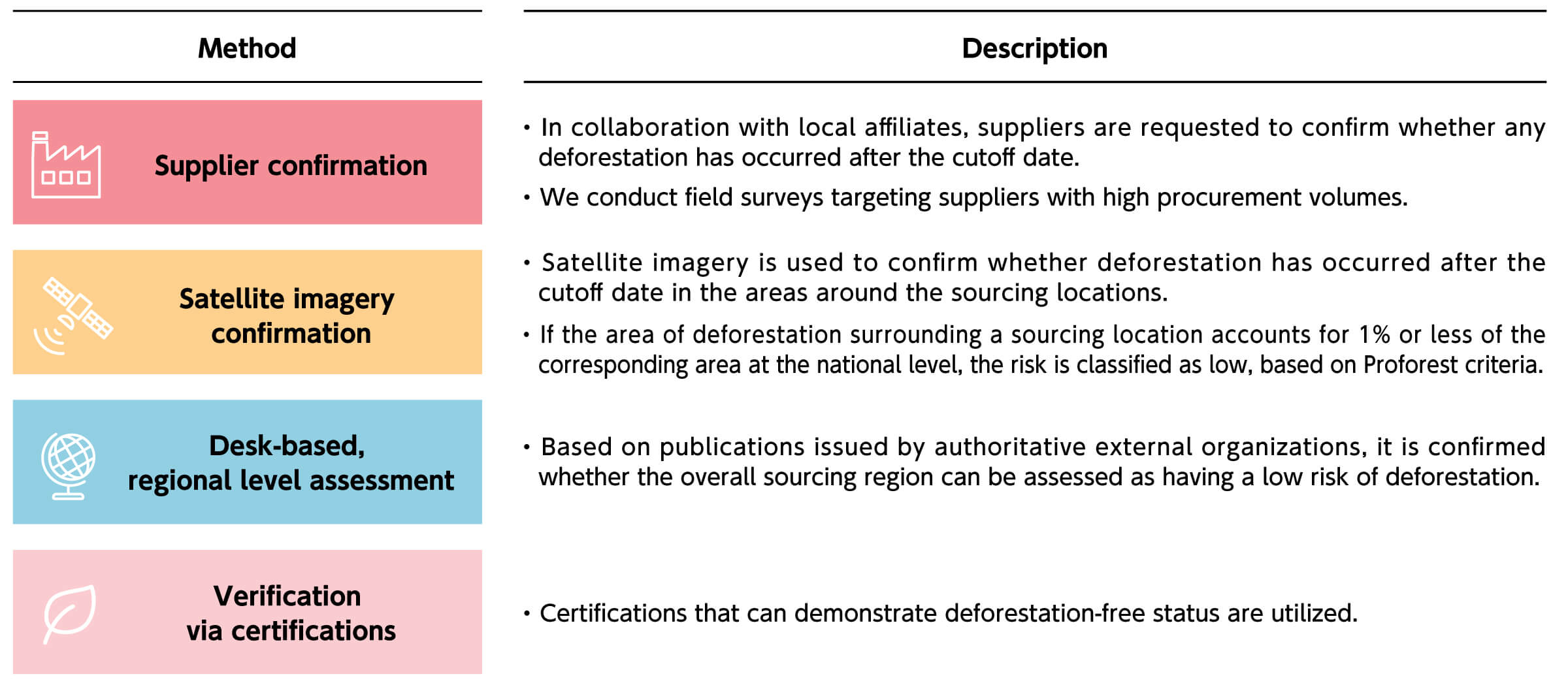
We select appropriate verification methods depending on the traceability status and the characteristics of raw materials and their origins.
Deforestation-Free Verification Methods
- *4 In conducting risk assessments, we refer to the assessment criteria and best practices provided by Proforest (a non-profit professional organization that supports the sustainable production and procurement of agricultural and forestry raw materials, and an AFi coalition member).
Proforest “Risk benchmarking for the EU deforestation regulation: Key principles and recommendations“
On Procurement “Under Confirmation with Supplier Collaboration”
With regard to the procurement volume categorized as “under confirmation with supplier collaboration,” for palm oil in particular, measures such as sourcing from specified mills verified to be “deforestation-free” and purchasing certified materials are already being implemented in phases.
As for other materials, since confirmation of the deforestation status and securing of traceability through to upstream suppliers are still in progress, we continue to conduct risk checks. Depending on the raw material, there may be many suppliers and multiple tiers of business partners upstream of processing sites, resulting in dispersed and multi-layered supply chains. As a result, comprehensively grasping deforestation risks all the way upstream presents challenges in terms of information availability and data quality, including information that is difficult for us to obtain on our own and the need for cooperation with relevant parties.
In response, we are working to improve traceability and to refine risk assessment accuracy through supplier engagement and field surveys (for the details on other materials, see the “Ensuring Traceability” and “Risk Assessment” sections below).
4. Actions Toward No Deforestation
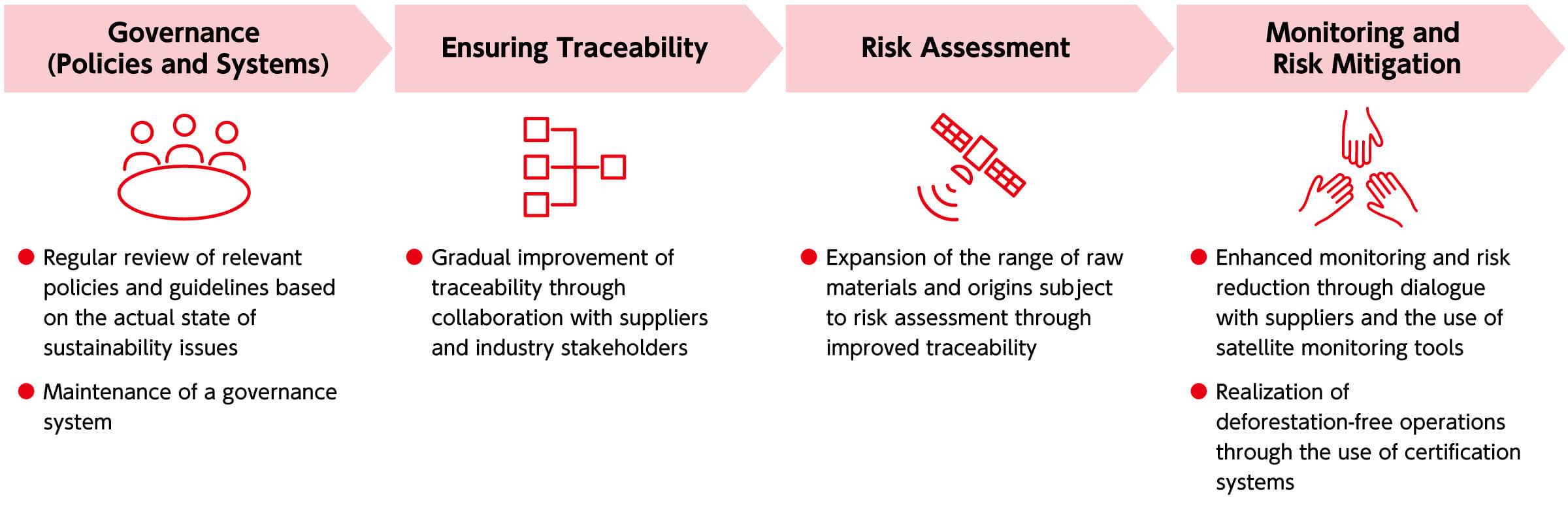
The Ajinomoto Group has established environmental governance (policies and systems), and is promoting traceability, risk assessment, monitoring, and risk mitigation in collaboration with stakeholders across the supply chain. We will continue and strengthen our efforts to achieve no deforestation across the entire supply chain.
Governance
Policies and Organizational Structure of the Ajinomoto Group
The Group is committed to faithfully upholding its policies, including the no-deforestation policy, and works to establish and operate internal control systems. We recognize sustainability to be a key business risk and opportunity, and we continue to make efforts to strengthen governance. For more details, please see the following.
- Group Shared Policy on the Environment
- Ajinomoto Group Biodiversity Guidelines
- Sustainability Approach and Structure
In addition, for priority raw materials, including those covered by this commitment, we have established commodity-specific sourcing guidelines and clarified our policy to procure materials that pose no deforestation risks. For more details, please refer to the “6. Business Partners: Fair and Transparent Transactions” section in the Ajinomoto Group Policies (AGP).
Group Shared Policy on Procurement
We clearly communicate our expectations for transactions to suppliers through the Group Shared Policy on Procurement and its accompanying guidelines. In addition, we regularly hold supplier briefings twice a year to share the Ajinomoto Group’s approach and initiative progress, as well as to exchange views.
Through these efforts, we request that suppliers understand the importance of environmental considerations, including the prohibition on deforestation, and to actively work to achieve compliance. We also ask suppliers to extend this policy to their own business partners (including upstream suppliers, agents, and all their employees) and encourage them to take actions to achieve compliance.
Furthermore, we monitor the compliance status through questionnaires. For more details, please refer to the following.
Ensuring Traceability
We believe that ensuring traceability is essential to understanding the actual state of deforestation risks within the supply chain. As a first step, we promote visibility in collaboration with suppliers, and, where necessary, conduct on-site visits to farms and processing facilities to obtain an accurate understanding of conditions on the ground.
As a result of these efforts, we have made progress in identifying upstream supply chain actors to assess deforestation risks. Currently, we have achieved a traceability rate of 93% with respect to mills for palm oil and 100% with respect to slaughterhouses for beef. For paper, we leverage certification schemes that involve third-party audits and verification, as well as the reliability of deforestation-free compliance assessments conducted by our business partners.
For beef, although traceability is required upstream from slaughterhouses to grazing areas, the multi-layered nature of distribution and transaction structures presents challenges. Therefore, we are proceeding with a phased approach to improving visibility. At present, we prioritize primary suppliers with large procurement volumes and engage in dialogue regarding management practices and information-sharing approaches. For soy, we are working to improve traceability through ongoing engagement with suppliers (for details, see the “Examples of Stakeholder Engagement” section).
Going forward, we will continue to steadily enhance traceability by taking into account the characteristics of each commodity and supply chain and advancing prioritized actions accordingly.
Risk Assessment
The Ajinomoto Group confirms whether there are any deforestation risks in procured raw materials through multiple approaches, including supplier confirmation, satellite-imagery-based confirmation, desk-based regional-level assessment, and verification via certifications (for details, see the “Verification Methods for ‘Deforestation-Free’” section).
For certain suppliers, we conduct on-site visits to production facilities and carry out detailed assessments of their risk management practices (for details, see the “Examples of Stakeholder Engagement” section).
Monitoring and Risk Mitigation
To detect newly occurring deforestation, we have established a system to receive information and reports through a supplier hotline, as well as the Group Customer Service Center that we make available to all stakeholders. In addition, to more accurately identify deforestation risks in the upstream supply chain, we are also exploring the use of satellite monitoring tools to detect deforestation and issue alerts.
If we identify a supplier suspected of involvement in deforestation, we will promptly conduct fact-finding and take appropriate action.
Participation in External Initiatives
To complement these company-level efforts, the Ajinomoto Group participates in external initiatives such as the United Nations Global Compact (UNGC), the World Business Council for Sustainable Development (WBCSD), the Consumer Goods Forum (CGF), and the Roundtable on Sustainable Palm Oil (RSPO).
Through these frameworks, we leverage internationally recognized principles, practical knowledge, and stakeholder networks to support risk mitigation through collaboration with suppliers. For more details, please refer to the following.
Examples of Stakeholder Engagement
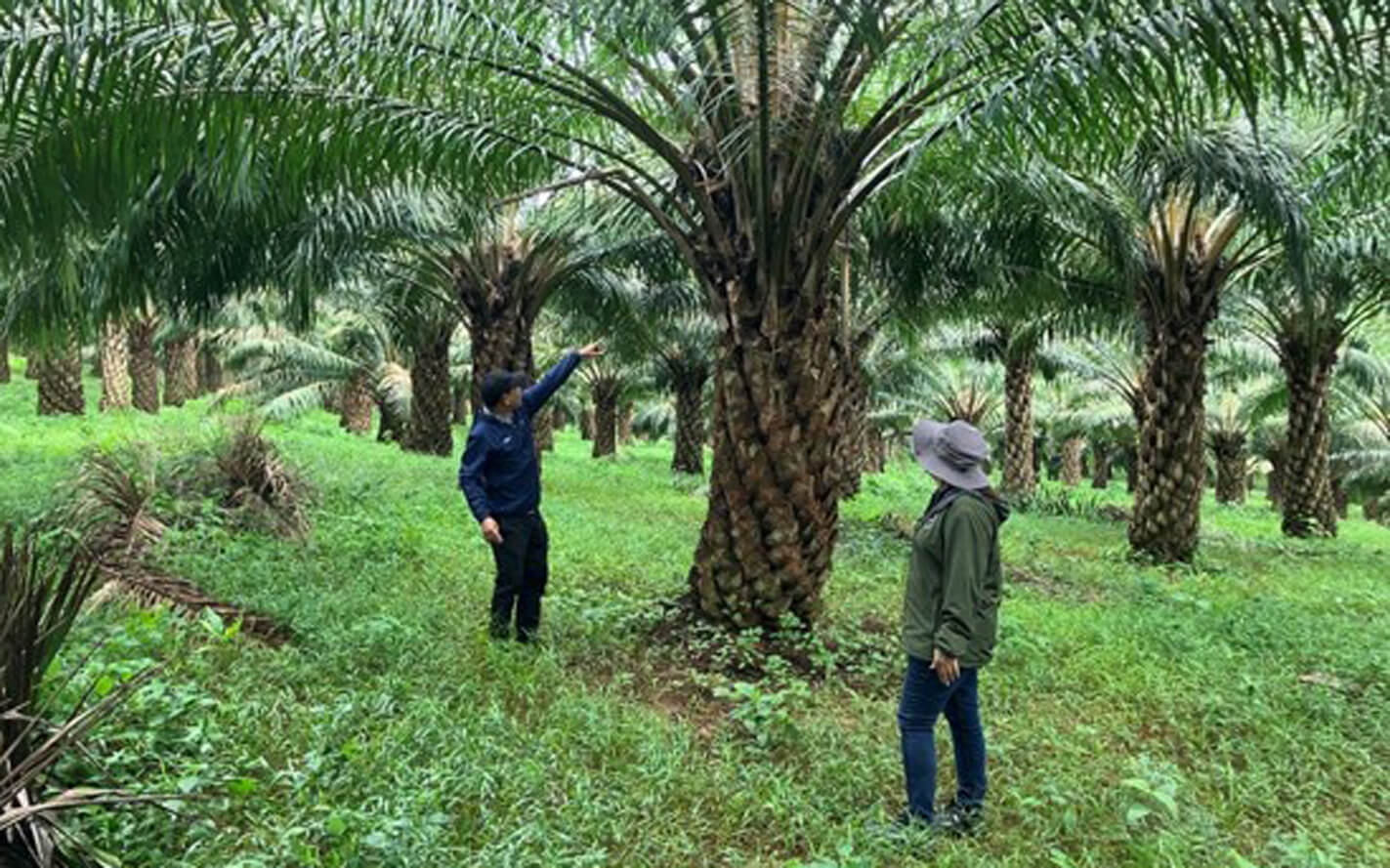
On-site Surveys with Palm Oil Suppliers in Thailand
Through Wan Thai Foods Industry, a Group company in Thailand, we conducted on-site surveys of its palm oil suppliers to confirm their approaches to managing deforestation risks and the actual status of their operations.
At major mills, we confirmed that systems such as RSPO certification management, traceability to farms, and processes for verifying the legality of land use were being appropriately implemented. In addition, through exchanges with experts, we conducted an assessment informed by the context of Thailand’s regulatory framework for deforestation and the RSPO system.
Based on these findings, procurement from mills where appropriate management and operations were confirmed was assessed as having a low risk of involvement in deforestation.
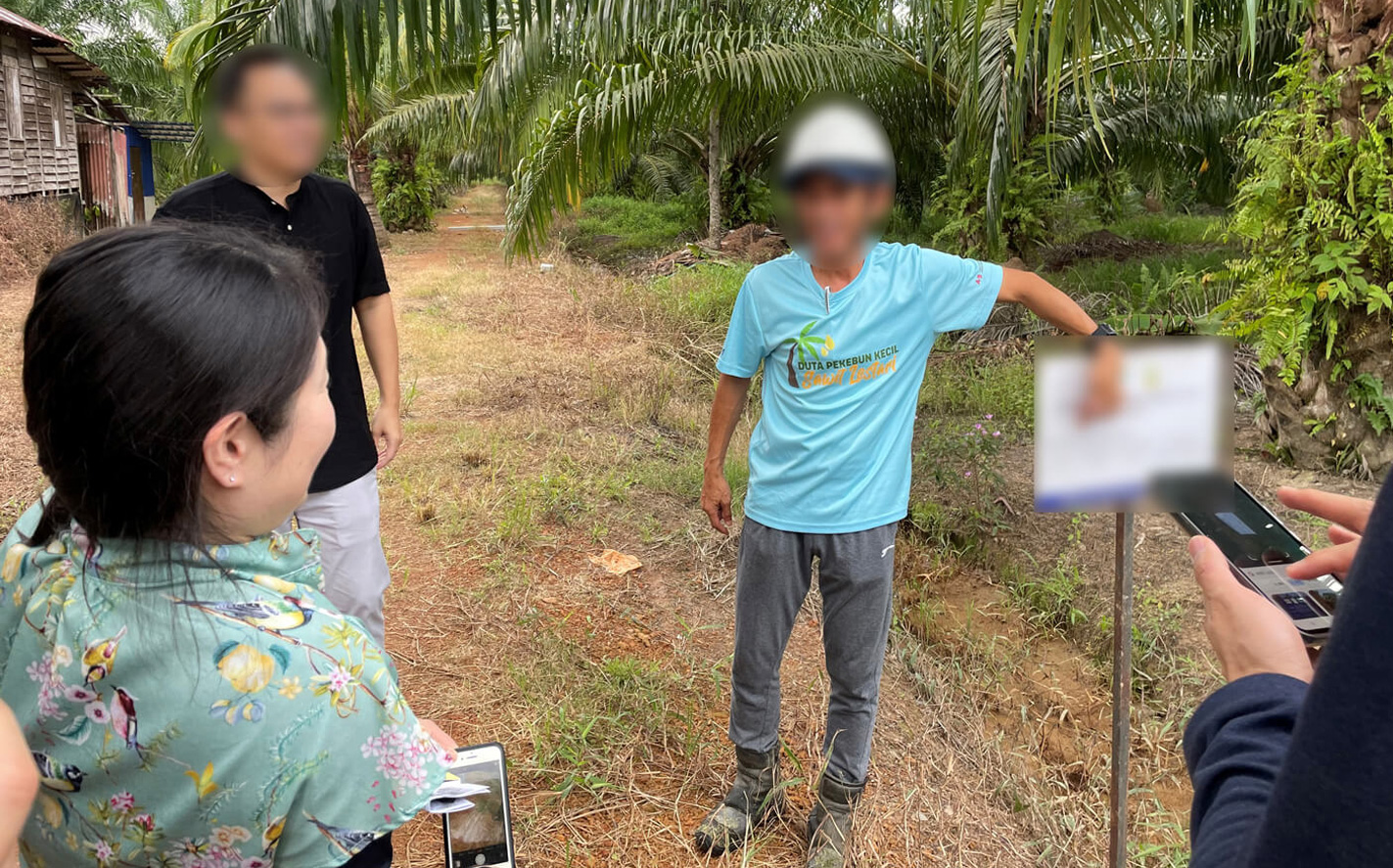
Engagement with Local Stakeholders in the Palm Oil Supply Chain in Malaysia
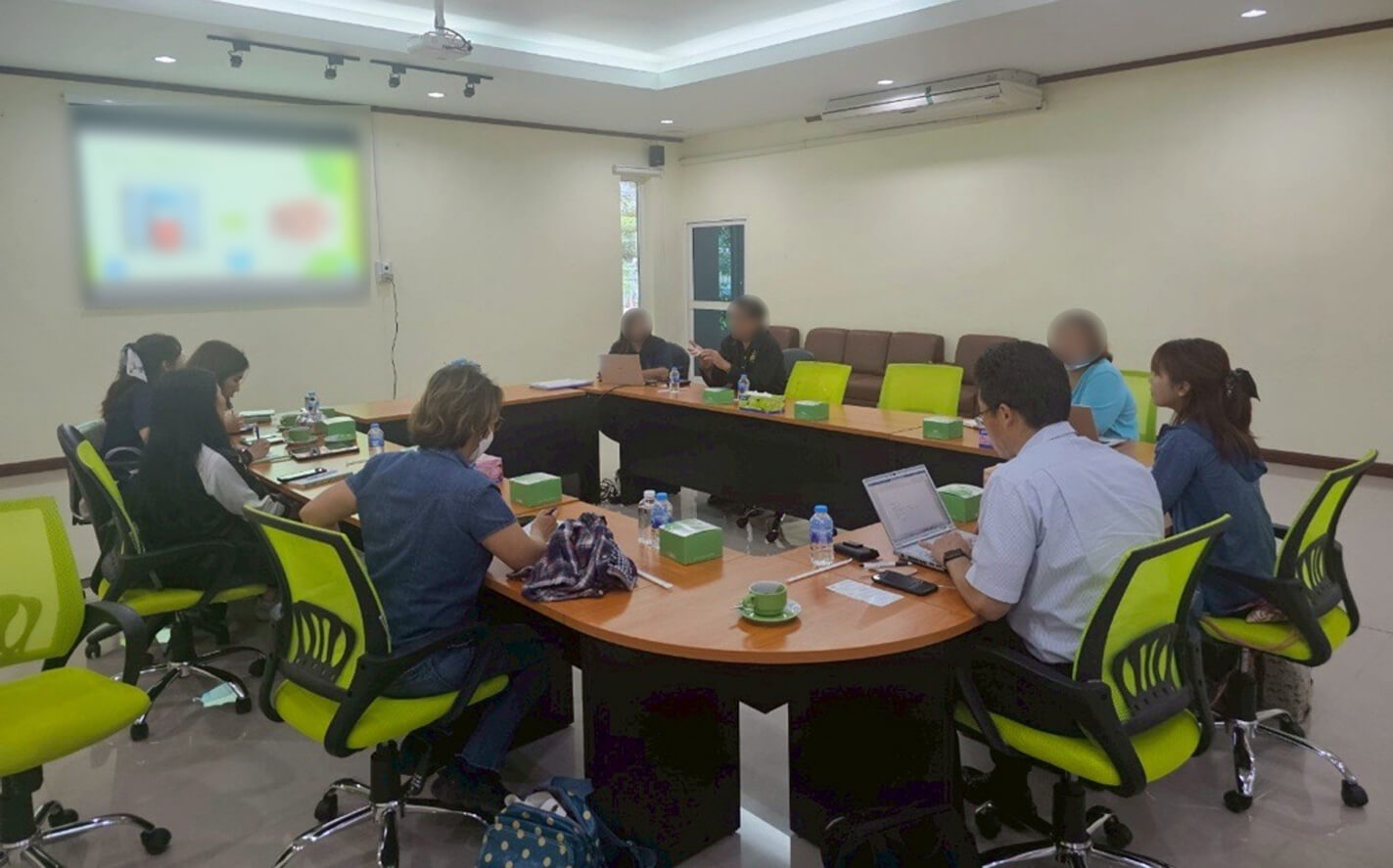
We visited multiple local stakeholders across the supply chain in Malaysia, including palm oil mills and farmers, and deepened our understanding of current conditions through dialogue and interviews on their approaches to deforestation risk management and operational practices.
Going forward, we will continue to engage with local stakeholders to support the development of sustainable supply chains.
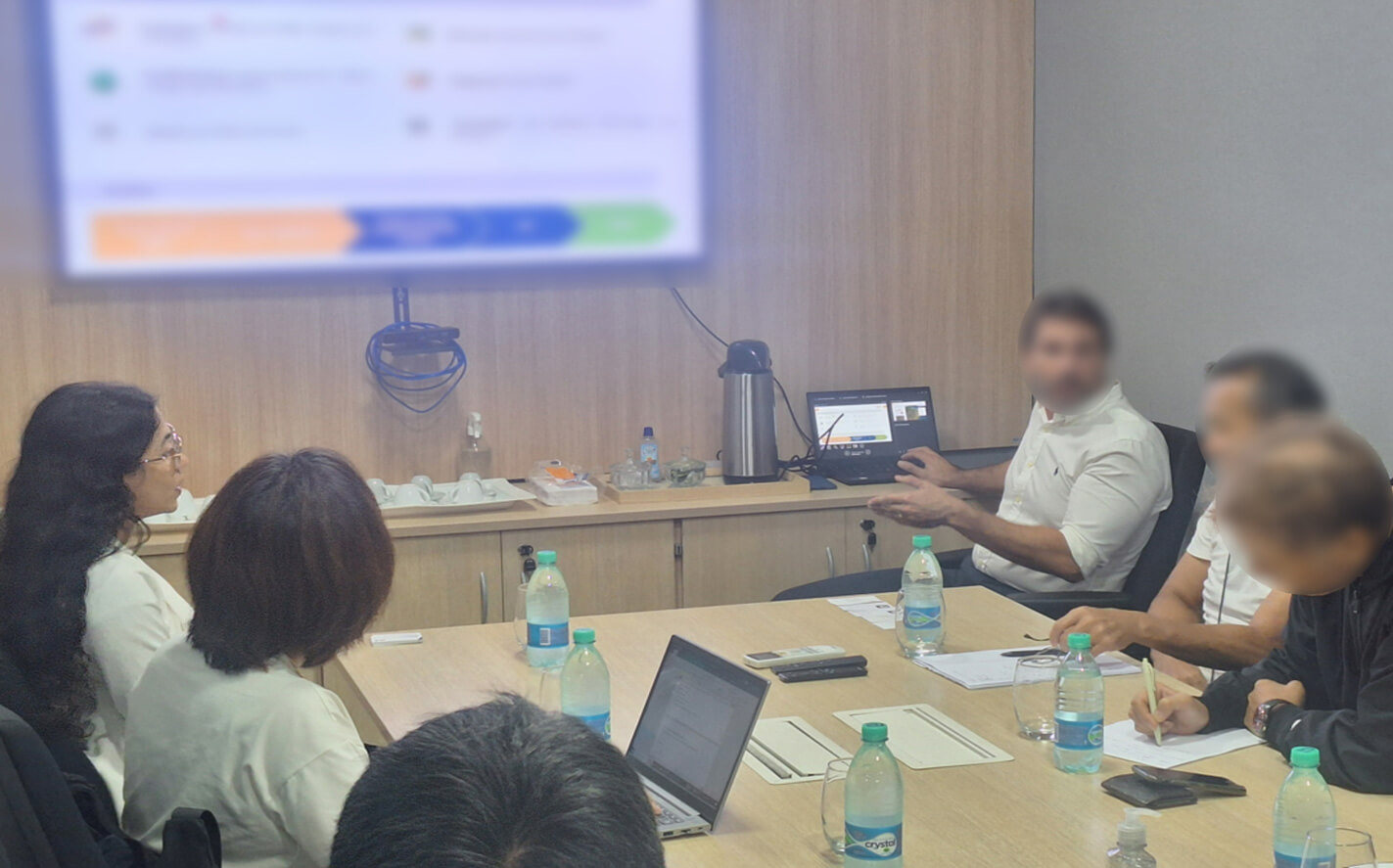
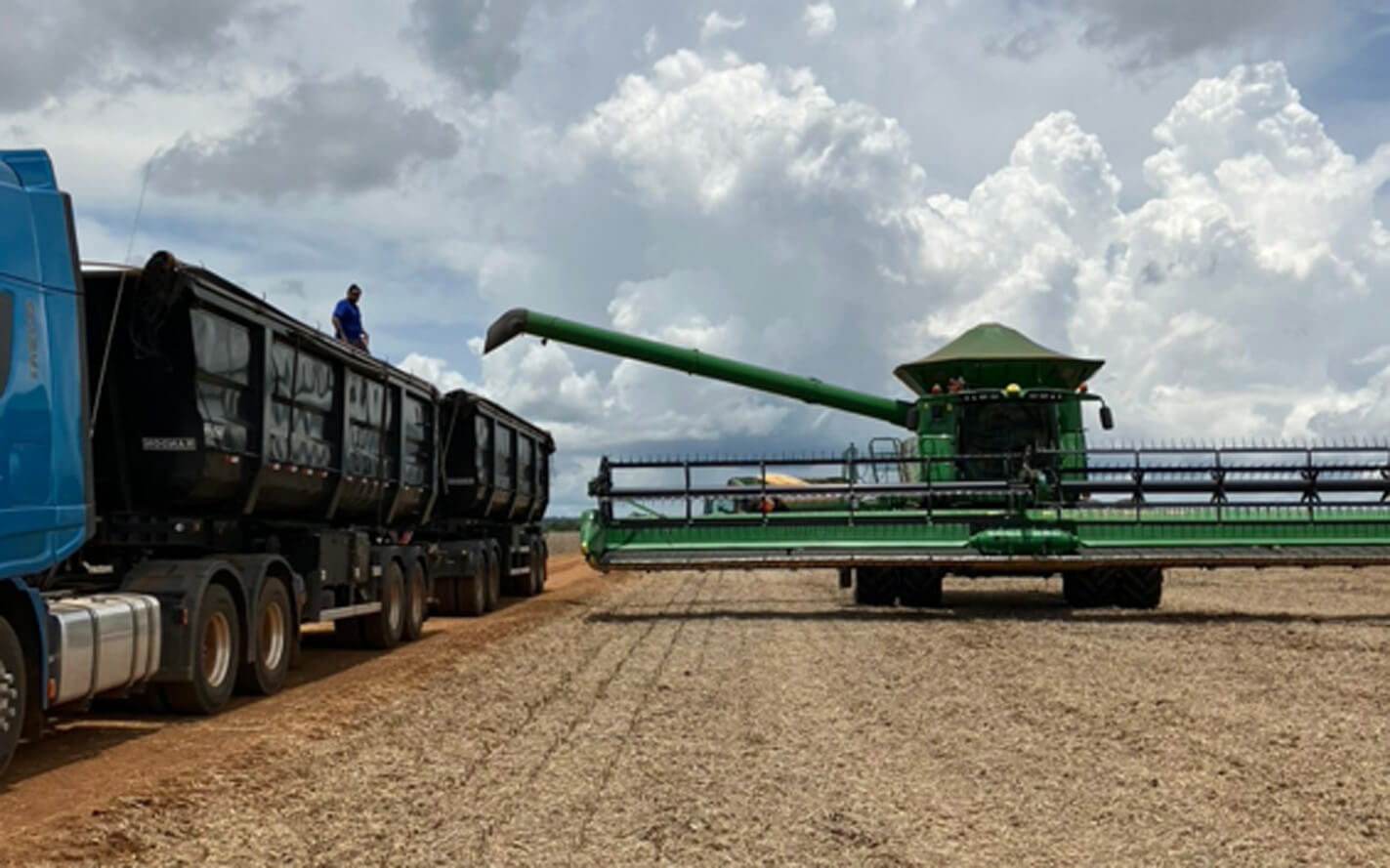
On-site Surveys and Engagement with Soy Suppliers in Brazil
Regarding soybean sourcing in Brazil, we conducted on-site visits and engaged in dialogue with suppliers to understand environmental risks, including deforestation, and to enhance traceability.
First, we conducted on-site visits with major suppliers with high procurement volumes to confirm their traceability systems, as well as their approaches to managing environmental risks such as deforestation and their operational practices. As a result, we confirmed that environmental risk management efforts are being implemented in a rational manner aligned with local systems and business practices.
In addition, with a view to improving traceability, we held discussions with other suppliers on information management practices and challenges within the supply chain. We will continue to engage in dialogue on an ongoing basis.
Future Outlook
The Ajinomoto Group has been advancing initiatives toward achieving no deforestation across the entire supply chain by collaborating with suppliers and industry stakeholders, with palm oil, soy, beef, and paper designated as priority commodities.
From FY2026, we will also position coffee as a target commodity, and we will progressively expand our efforts to achieve no deforestation. For coffee, we have already strengthened initiatives to ensure traceability, promoted procurement of certified green coffee beans, and are advancing initiatives that contribute to forest restoration, such as participation in regenerative agriculture pilot projects in Vietnam and Brazil (for details, see here).
Building on our efforts to date, we will continue to maintain our governance framework (policies and systems) and enhance traceability, while also expanding the scope of risk assessment and advancing the development of monitoring and risk mitigation measures.
Actions Toward No Deforestation