



Table of Contents
Global Food Loss and Waste in Figures
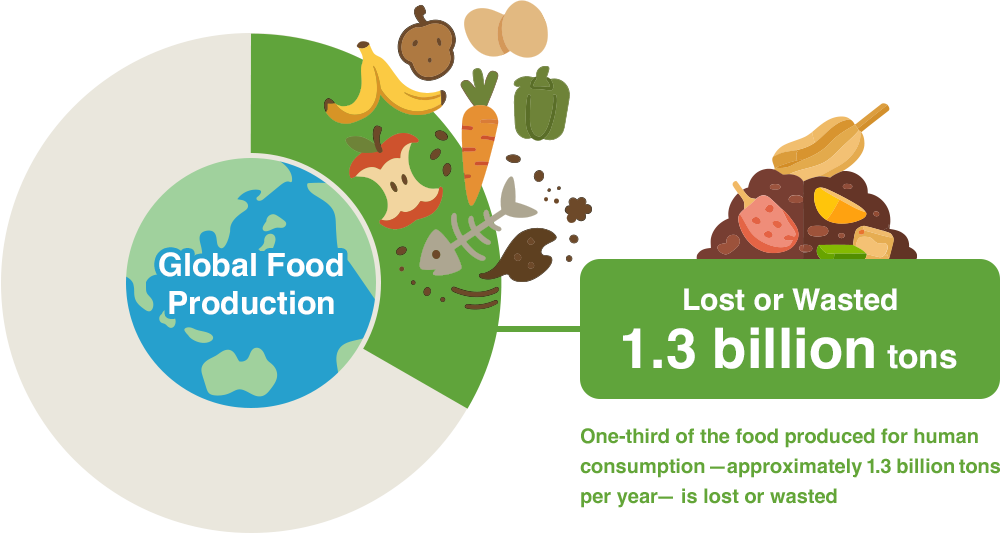
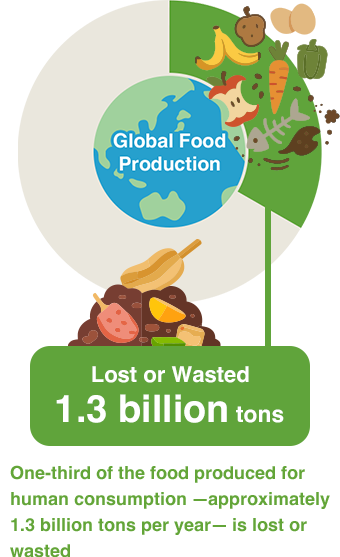
While one-third of food produced for human consumption is lost or wasted, millions of people continue to suffer from hunger.
Beyond economic losses, greenhouse gas emissions (GHG) arising from food loss, including landfilling disposal and incineration, account for 8% of total GHG generation and have a serious impact on climate change.
Undernourished
800 million people


At the same time, nearly one-tenth of the world's population (about 800 million people) is undernourished.
Hunger is particularly prevalent in developing countries, many of which play a critical role in global food production and are highly vulnerable to climate change and social issues.
population growth 2050
Furthermore, concerns are rising about the shortage of food resources due to population growth looking ahead to 2050.This makes it increasingly important to move away from the current model of mass production, mass consumption, and mass disposal.
Reducing food loss and waste is no longer optional—it is an urgent global priority.
Source: Food and Agriculture Organization of the United Nations
Why Is the Ajinomoto Group Committed to Food Loss and Waste Reduction?
At the Ajinomoto Group, reducing food loss and waste is a core part of our commitment to realize sustainable food system.
- 1) Efforts to reduce food loss and waste contributes to solve many social and environmental issues, such as GHG reduction, biodiversity conservation, food security, and human rights.
- 2) We can contribute to the circulation of food resources throughout the entire value chain, by minimizing loss and waste of the limited food resources and by making efforts to convert them for use with higher values, including fertilizer and animal feed.
- 3) The Ajinomoto Group advocates for Nutrition Without Compromise. For us, it is important that diverse and nourishing food resources are available and accessible to all.
The Ajinomoto Group Initiatives Across the Entire Value Chain
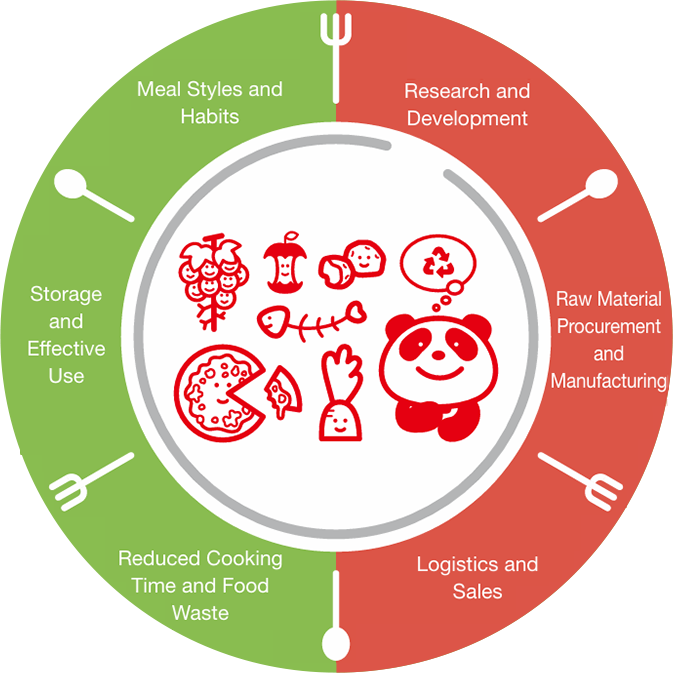
Society and Consumers
- Make loss and waste reduction a habit for all
- Satisfaction from doing something good for the plant; lessons about food and nutrition
- Storing food, introducing effective ways of using food
- Tricks to keep the fridge (and your mind) clear, storage methods to avoid waste and save money
- Providing recipes to use leftover ingredients
- Nutritious recipes using leftover ingredients, recipes that use up ingredients completely
The Ajinomoto Group
- Research and development to make the most of limited food resources
- Amino acid function, fermentation technology, etc.
- Develop products to retain flavor longer and reduce waste
- Extend expiration dates, reduce package size for small families, make packaging easier to reseal
- Collaborate with suppliers to improve quality and productivity
- Improve yields, make use of irregularly shaped products, improve storage/freshness management
- Pursue production that leaves little waste
- Reuse food resources effectively as feed and fertilizer
- Cut waste by working with retailers and distributors
- Use precise demand forecasting, efficient management, etc.
The Ajinomoto Group Initiatives
The Ajinomoto Group Food Loss and Waste Reduction Targets
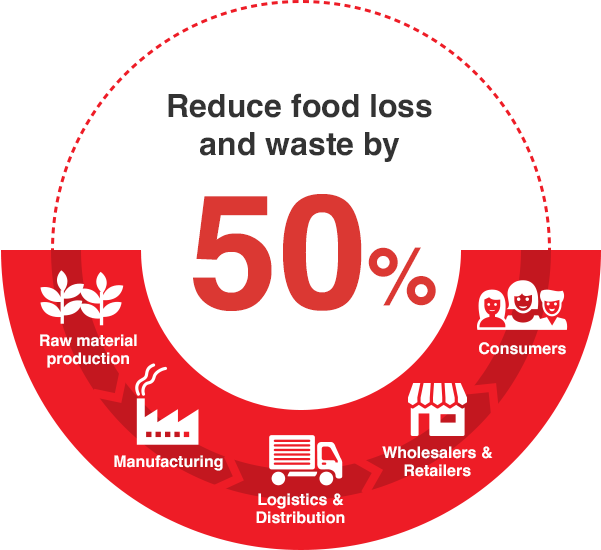
Targeting a 50% reduction (compared to 2018)
- Food loss generated through 2025, between the intake of raw materials and the delivery of products to consumers
- Food loss generated through 2050 across the entire product lifecycle
The Ajinomoto Group Food Loss and Waste Reduction Efforts
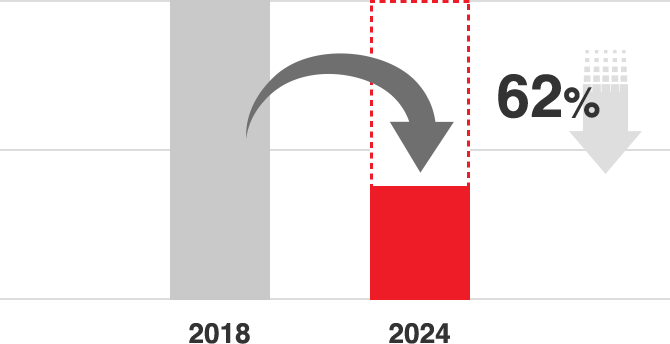
In 2023, the Ajinomoto Group achieved a 53% reduction in food loss and waste generated between the intake of raw materials to the delivery of products to consumers compared with the base year of 2018. In 2024, we achieved a 62% reduction. These achievements were driven by company-wide collaboration and continuous improvement efforts, including the following measures:
・Identifying issues by visualizing the source of generation by product and production process.
・Implementing PDCA cycles in collaboration with business, production, and research teams.
・Sharing successful reduction practices and collaborating initiatives globally across business units.
We will continue to work with stakeholders and partners to solve issues and reduce food loss and waste throughout the value chain.

Examples of the Ajinomoto Group Initiatives
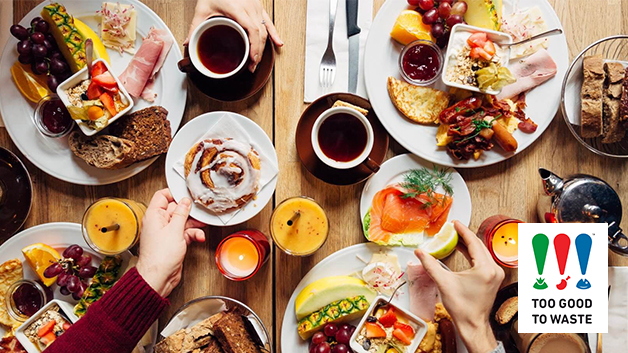
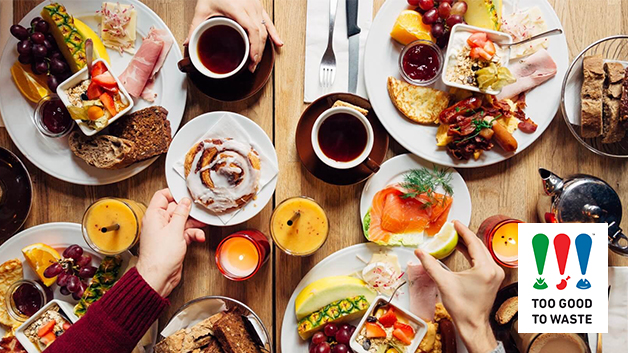
TOO GOOD TO WASTE™ initiative targets major source of food waste: our kitchens

Putting every part of our skipjack tuna to good use. How does the Ajinomoto Group conceive of sustainable food systems and aspire for “Well-being”?

Working to Achieve Well-Being With Local Communities Through Eating Together at the AjiPanda Cafeteria
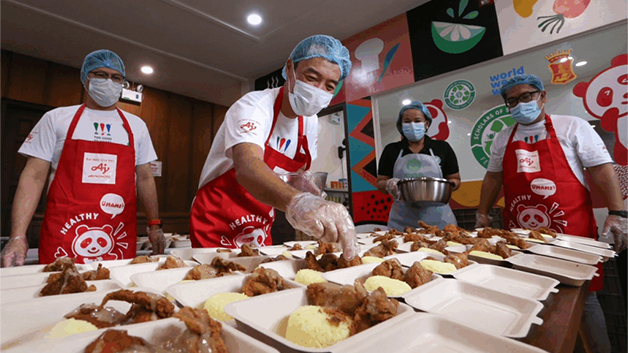
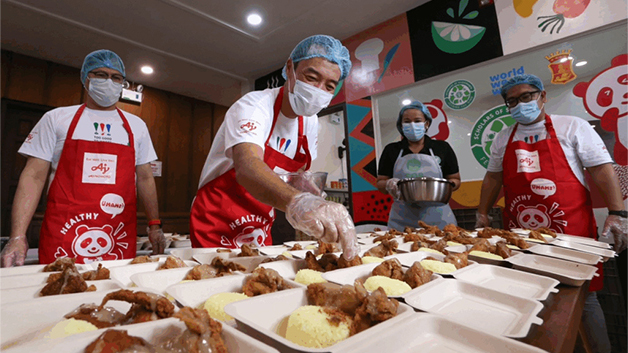
Ajinomoto Philippines and SOS team up to Fight Food Waste and Hunger
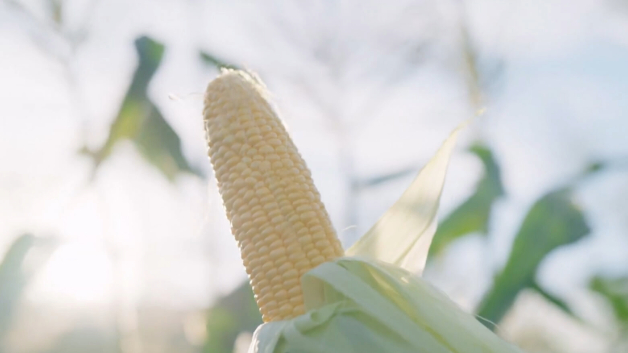
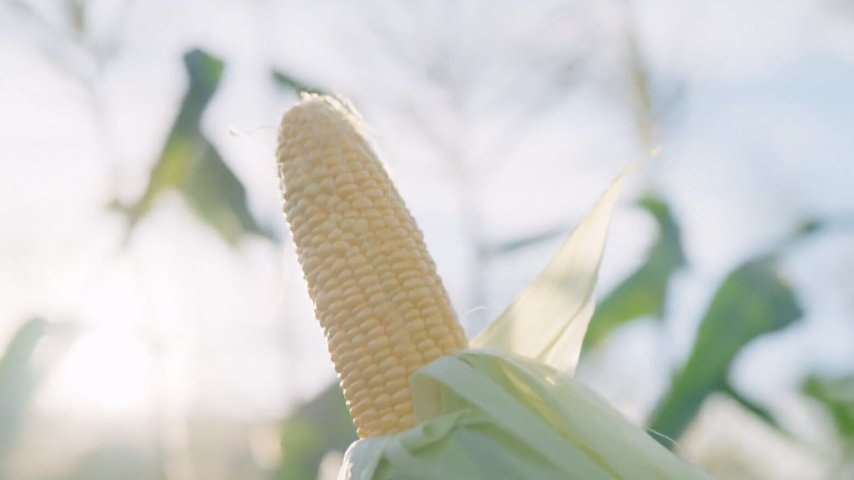
Using Supersweet Corn to the Fullest! Turning Supersweet Corn Into Sustainable Value: The Ajinomoto Group’s Commitment in Action
TOO GOOD TO WASTE IN THE WORLD
TOO GOOD TO WASTE™: Food Loss and Food Waste Reduction for a Sustainable Future

Initiatives at Ajinomoto Co., (Thailand) Ltd.

Ajinomoto (Malaysia) Berhad and AIESEC Collaborate to Promote Wellness and Reduce Food Waste Among Malaysian Youths
Initiatives at PT AJINOMOTO INDONESIA

"Too Good To Waste" - Eat it All, Reduce Global Warming
Partnerships and Alliances Related to Food Loss and Waste
The Ajinomoto Group contributes to food loss and waste reduction by working with in organizations that lead in reduction efforts.

External Recognitions
-
10 08, 2026
Minister of the Environment Award at the 2024 Food Loss Reduction Promotion Awards (Japan)
-
09 26, 2025
Fukuoka Prefecture Governor’s Award for excellence in food loss reduction initiatives