
Ajinomoto Group Nutrient Profiling System (ANPS)
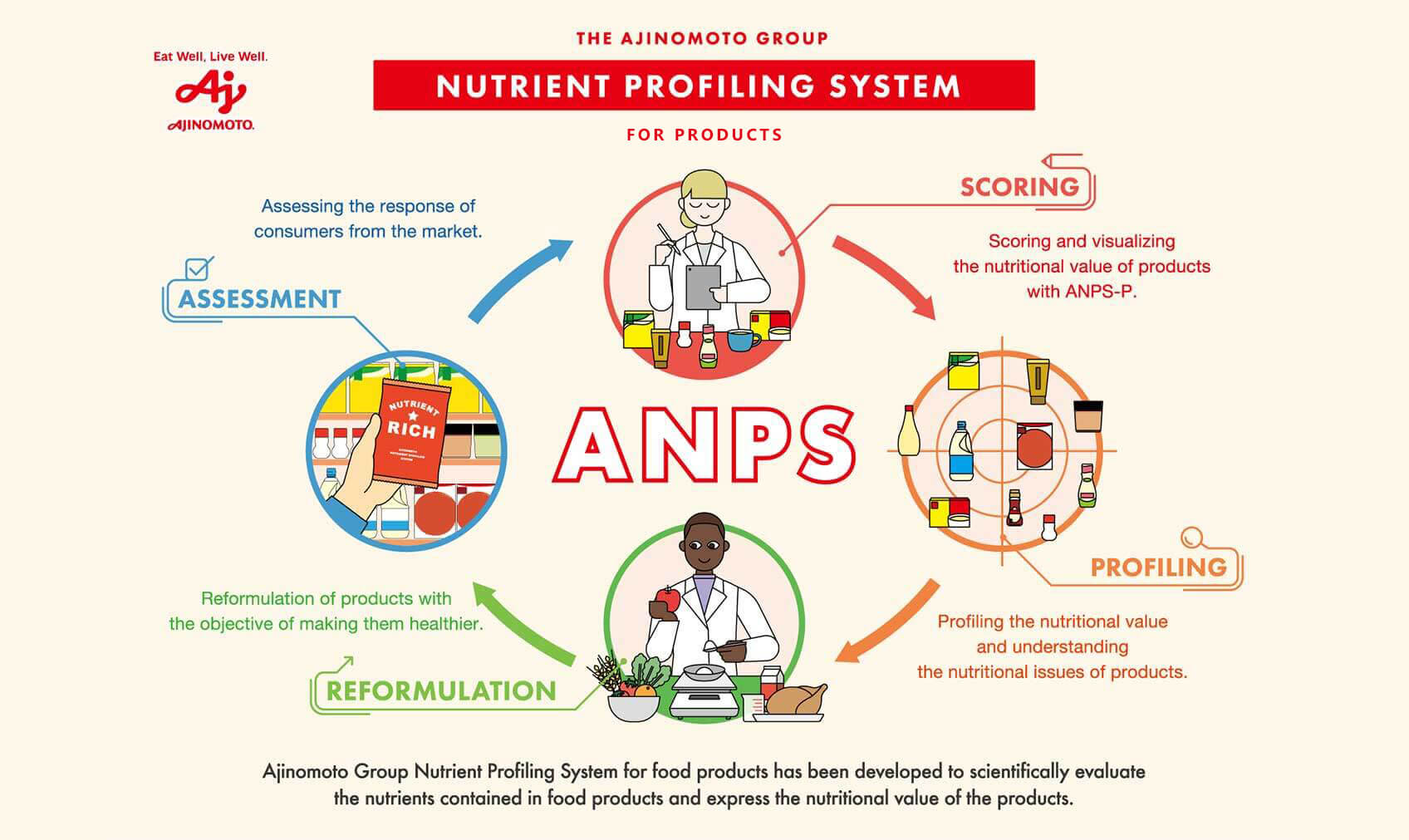
Contributing to the Resolution of Nutritional Challenges through Nutrient Profiling
Globally, it is estimated that more than 2.5 billion people are at risk of lifestyle-related diseases due to obesity or overweight caused by excessive nutrient intake, while at the same time protein, vegetables, and dietary fiber tend to be insufficient in many diets, meaning that society faces two opposing nutritional challenges. However, for consumers, it is difficult to maintain a nutritionally balanced diet on a daily basis based on knowledge of required nutrients alone. As a result, public interest in initiatives by governments and companies to improve nutrition is growing.1
Against this backdrop, global food companies have been developing and introducing Nutrient Profiling Systems (NPS) as a scientific method for evaluating the amounts of nutrients contained in foods and expressing the nutritional quality of foods in an easy-to-understand manner. In an NPS, the nutritional quality of foods is calculated as a numerical score using a defined formula, making it possible to compare the nutritional value of multiple products within the same category, as well as before-and-after product reformulations, using a common evaluation standard.
Introduction and Utilization of the Nutrient Profiling System
The Ajinomoto Group became the first Japanese company to introduce an NPS.
As of March 2024, the Ajinomoto Group Nutrient Profiling System (ANPS) has been introduced at 16 Group companies in 13 countries including Japan, and is used to evaluate approximately 900 products.
The ANPS-P (for Product) is based on the scoring methodology of the Health Star Rating System, a nutrient profiling system used in Australia and New Zealand2. It scientifically evaluates the nutritional value of products based on the content of nutrients that should not be consumed in excess—calories, sugars3, sodium, and saturated fatty acids4—as well as nutrients and food groups that tend to be insufficient and are recommended for intake—namely protein, vegetables, fruits, nuts, legumes, and dietary fiber.
However, because ANPS-P and conventional NPS frameworks have limitations when applied to products such as seasonings, the Ajinomoto Group has developed ANPS-Dish, which evaluates menus prepared using seasonings and other products, and ANPS-Meal, which evaluates actual Japanese meals as complete menus.
Going forward, the Group will continue to develop ANPS frameworks tailored to local food cultures and plans to expand their application globally, including in ASEAN countries and South America, thereby supporting improved nutrition through meals that reflect regional dietary practices.
¹ World Health Organization, Obesity and Overweight Fact Sheet (2025)
² A nutrient profiling and food rating system jointly developed by government, industry, and academia in Australia: http://www.healthstarrating.gov.au/
³ The total amount of five sugars contained in products: sucrose, glucose, fructose, lactose, and maltose
⁴ Fatty acids mainly found in animal-derived fats